
 91 -11 - 2336 3390
  director@caritasindia.org
 Women Leadership and Community Empowerment Reviewed at Sanjivani Meeting
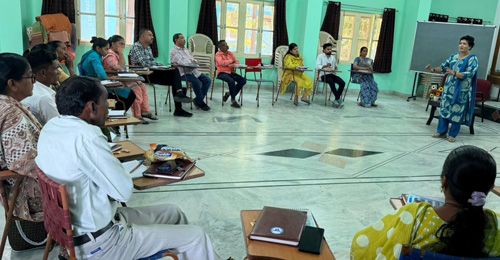
Caritas India partners presented the significant achievements of women leadership initiatives under the Sanjivani programme during the review meeting held in Gandhinagar on 25 and 26 February 2026. The two-day review brought together partners from Gujarat and Madhya Pradesh to reflect on progress, consolidate learning, and chart a stronger roadmap for advancing women led governance and community transformation.
Addressing the gathering, Fr. Benny Edayath appreciated the partners for implementing the programme in its true spirit by fostering women leadership and nurturing vibrant community platforms. He emphasized the importance of women’s participation in grassroots governance and community decision making. “Women’s participation in grassroots governance and community decision-making assume significance because it contributes to the overall empowerment of women and greater advancement of society. Caritas India is committed to empowering women and help them emerge as decision-makers”. He further urged the partners to intensify their efforts to strengthen women leadership and ensure that communities have adequate knowledge about government services and entitlements.
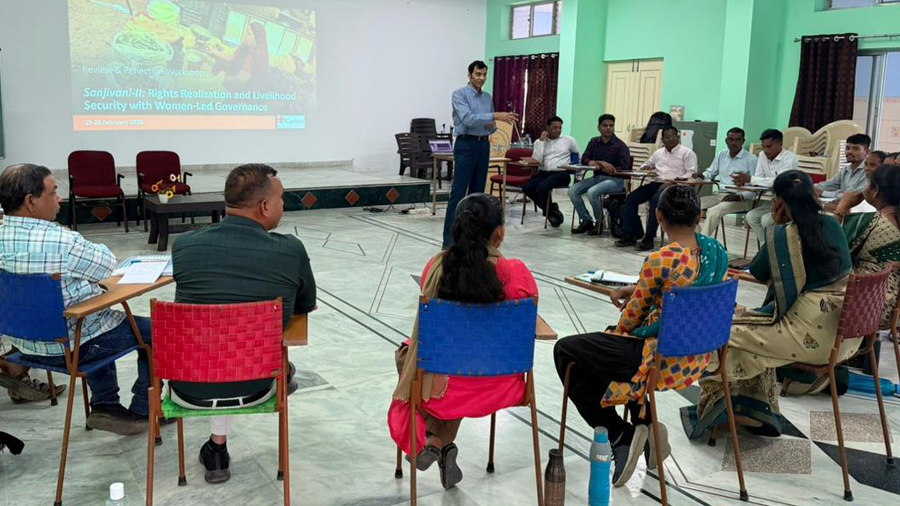
During the review, partners presented the major impacts achieved by Sanjivani. More than 8000 households were linked with government welfare and development schemes at the demand and initiative of women, demonstrating their growing agency in engaging with public systems. Similarly, more than 6000 applications and memoranda were submitted by women in Gram Sabhas, Panchayats, and government offices to claim benefits of various schemes and programmes. At women’s insistence, several Special Gram Sabhas and Ward Sabhas were convened exclusively for women, creating dedicated spaces to present women’s agenda in governance platforms. Women also prepared and submitted micro plans articulating their collective priorities and development aspirations.
Focused interventions on scheme literacy, financial literacy, and governance literacy strengthened women’s awareness and confidence to navigate administrative processes. Many households were supported to obtain eligibility documents necessary for accessing development and welfare rights. Women led transparency and accountability initiatives were undertaken to ensure effective implementation of government services, reflecting a shift from passive beneficiaries to active rights holders. A significant number of households were also linked with government healthcare and insurance services, thereby expanding social protection and reducing vulnerability.
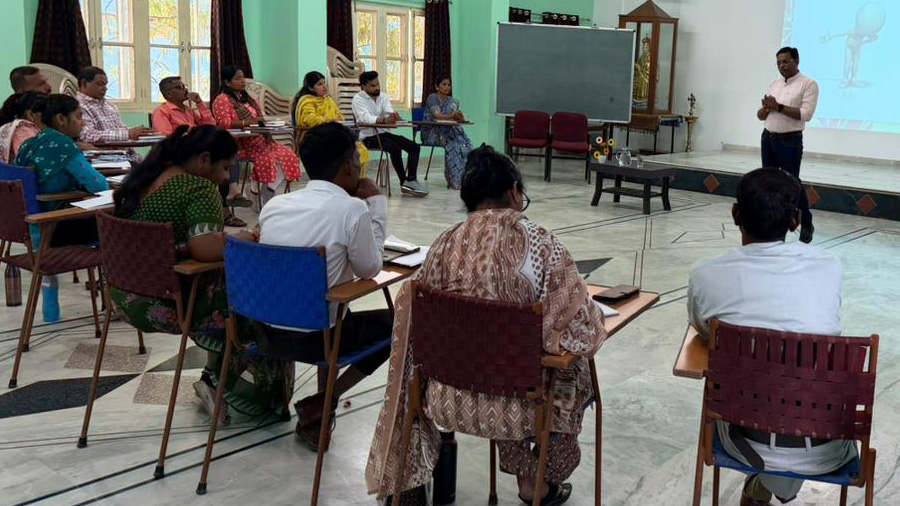
Collective campaigns led by women brought forward numerous community issues, many of which were addressed and resolved through sustained engagement with local authorities. Women’s participation in Gram Sabha meetings increased considerably, transforming these forums into more inclusive and responsive spaces for dialogue and decision making.
Livelihood promotion continued to be a strong pillar of the programme. More than 400 women-led alternative livelihood units were initiated, and many women started small businesses and income generation activities. Women also undertook measures to enhance food and nutrition availability at the household level, contributing to improved health and resilience. These initiatives not only strengthened economic independence but also reinforced women’s confidence as contributors to household and community development.
Institutional strengthening emerged as another major achievement. A broad network of community-based organisations and other organisations of women were raised and strengthened as platforms for empowerment and collective campaigns. Thousands of women emerged as community leaders, actively participating in governance processes and community initiatives. Women and adolescents were groomed and activated as digital friends, assisting communities in accessing online services, information systems, and digital governance platforms.
Women’s movements also contributed to the creation of community assets that benefit the wider population and strengthen local infrastructure. In addition, children’s parliaments were raised and strengthened to nurture democratic values, leadership qualities, and civic responsibility among children, ensuring that participatory governance becomes a sustained culture within communities.
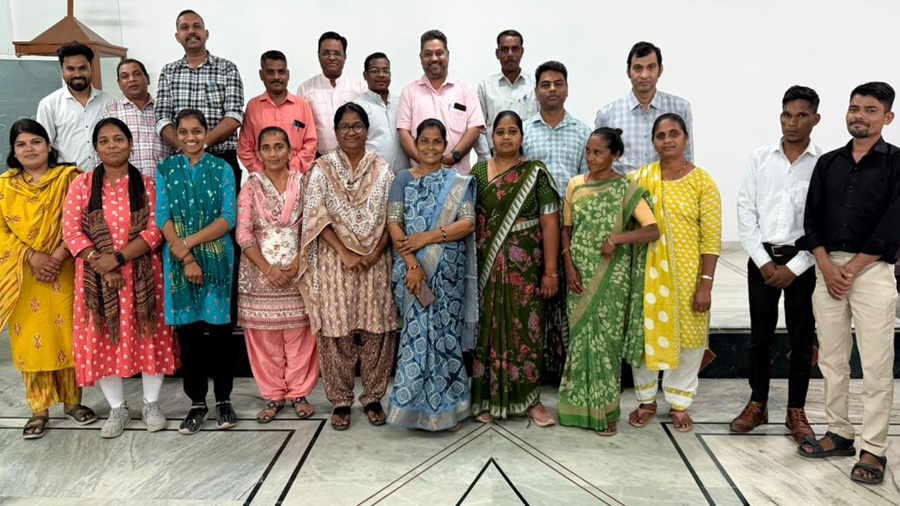
Sanjivani II, implemented as a cluster initiative by partners in Gujarat and Madhya Pradesh, promotes women leadership in governance and community level decision making. The project strives to increase decision making participation of women in governance processes and spaces leading to greater democratization of the governance system, improved access to welfare and development services with women led action, and stronger leadership at community levels for protection and solidarity.
Currently implemented across 75 villages and 10 urban settlements in both states, Sanjivani continues to expand its outreach and deepen its impact. During the review, partners developed strategic plans to further strengthen women leadership, prepare the next generation of community leaders especially adolescent girls, and promote entrepreneurship by enhancing financial literacy, improving credit access, strengthening capacities, and building market assessment abilities among women.
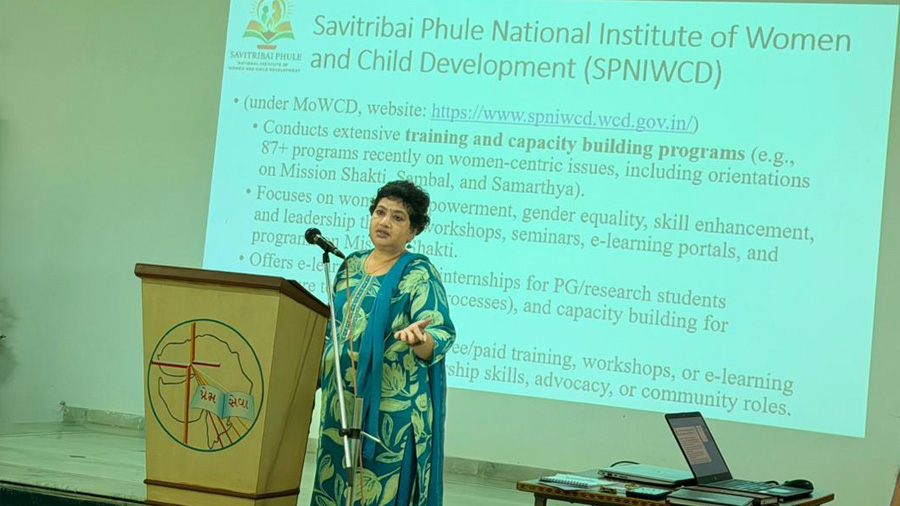
The field teams also interacted with Ms. Rosily Victor, an entrepreneurship and leadership mentor, who shared valuable insights on community leadership, entrepreneurship, and personality development. She also spoke about the balance of life which should assume priority in the life of everyone and emphasised that the objective should be improving the quality of life with balance of life.
The partners collectively developed an impact plan for the next five months and reaffirmed their commitment to further strengthen community-based organisations which will eventually become the vehicle of empowerment for communities, especially women. Dr. Saju MK – Zone Programme Lead, Dr. Mukund Deshmukh – Assistant Lead and Mr. Soju the Zone Finance Officer facilitated the two-day review.
Upcoming News
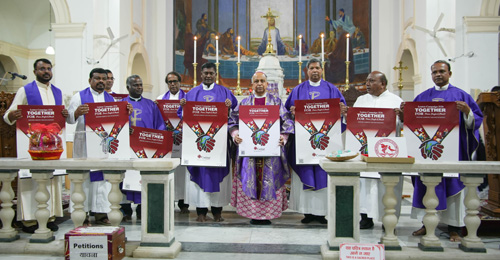
Caritas India launches Lenten campaign with call for peace, inclusion, and climate action
Caritas India has launched the Lenten Campaign 2026 with a bold message: peace must be...
LEARN MORE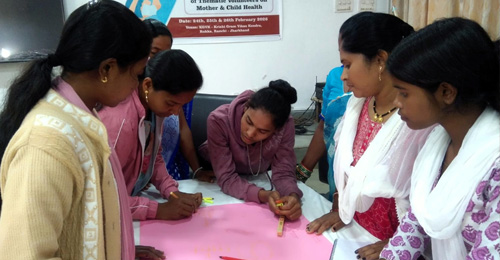
How do you take quality health services to the last woman in the last village?
How do you ensure that every pregnant woman in a remote village receives timely care?...
LEARN MORE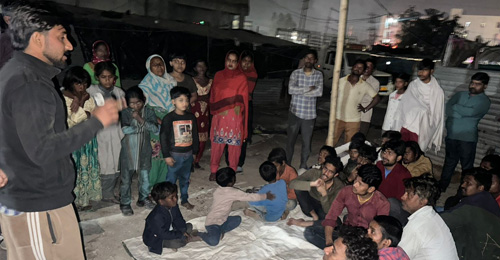
Pravasi Bandhu Program Illuminates Path for 180 Migrant Workers: Safe Migration, Secure Future
In a significant step toward safeguarding the rights and well-being of migrant workers, Caritas India’s...
LEARN MORE 91 -11 - 2336 3390
  director@caritasindia.org


