
 91 -11 - 2336 3390
  director@caritasindia.org
 Caritas India’s Safeguarding Mission Reaches Northeast India
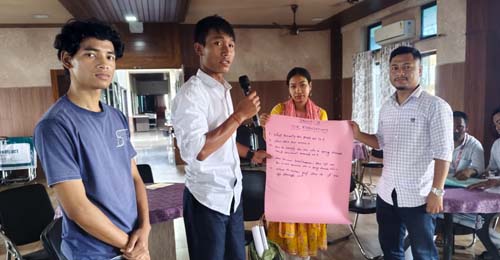
When a field officer working on livelihood programmes walked into a safeguarding training in Guwahati this week, she was quietly sceptical. Her work was about income, agriculture, and community enterprise and what did safeguarding have to do with any of that? By the time she walked out two days later, she had her answer. And she was ready to give it to others.
Her experience was not unusual in the room. It captured something essential about what Caritas India is attempting with its expanding safeguarding programme, not just to inform people about protection policies, but to rewire how ordinary workers across sectors understand their own responsibility toward the vulnerable people they serve every day.
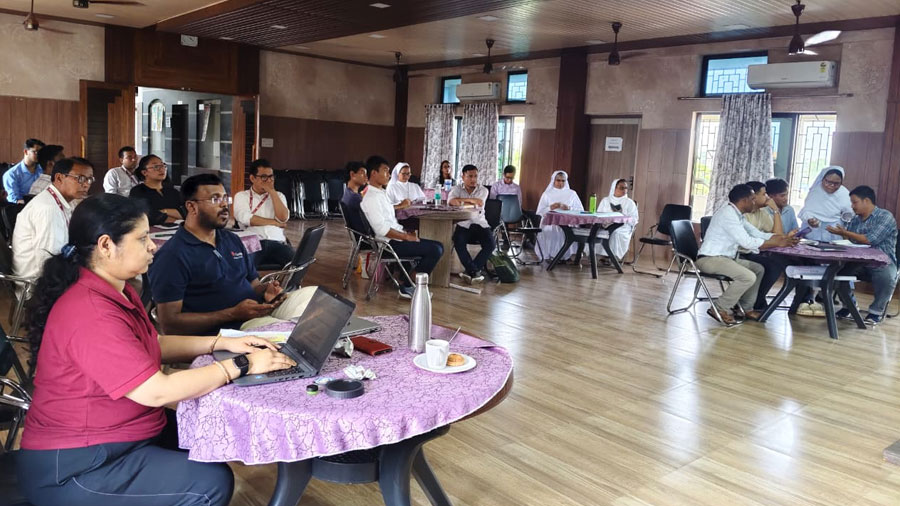
On 22 and 23 April 2026, Caritas India in collaboration with the NEDSSS Forum and the Centre for Development Initiatives (CDI) in Guwahati conducted a Beginner-level Safeguarding Module training for participants from the North-East region. The gathering brought together 27 representatives from four faith-based organisations: FAsCE India, Auxilium Reach Out, Caritas India, and CDI, each carrying deep grassroots presence across Assam and the wider North-East.
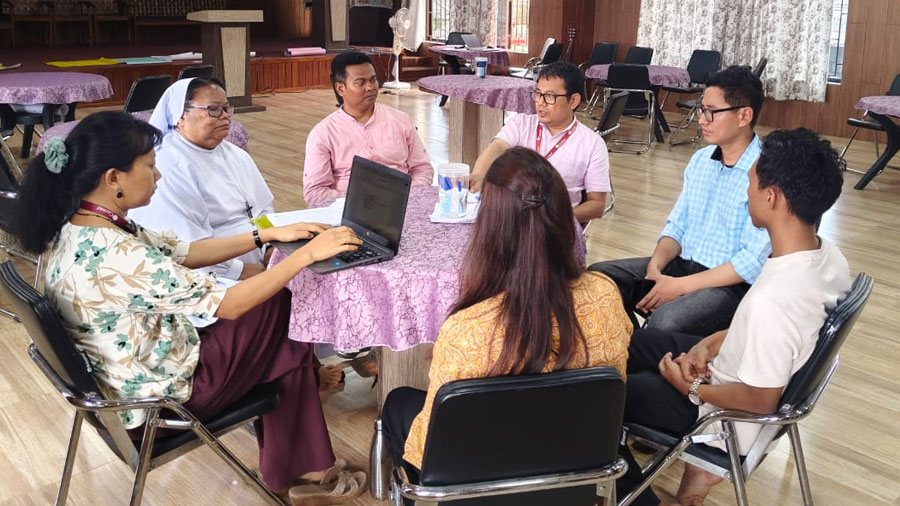
What distinguished this training from a conventional awareness session was its intent. These 27 participants were not being trained merely to understand safeguarding. They were being trained to equip as frontline facilitators through the Teach-Back methodology, an approach that builds confidence and capability simultaneously by asking people to practise what they have just learned on others in real time.
General Councilor for Social Apostolate and Director of CDI, Sr. Lisa Elavunkal MSMHC in her keynote address emphasized that safeguarding is a core commitment to “do no harm,” is rooted in human dignity rather than mere compliance. She highlighted the importance of fostering a speak-up culture, remaining alert to signs of concern, and upholding the Code of Conduct. She concluded by affirming that safeguarding is an act of love, ensuring protection and dignity for all.
Caritas India’s choice of the Teach-Back methodology is deliberate and significant. Most safeguarding training stops at comprehension where participants leave knowing more than they arrived. The Teach-Back model goes further: it asks participants to demonstrate their understanding by facilitating sessions themselves, exposing gaps, building confidence, and creating a cohort of people who can independently carry the training forward into their own organisations and communities.
This approach was first piloted in November 2025 when Caritas India, with the support of Caritas Asia, conducted the Beginner-level Safeguarding Module for frontline leaders from the North-East, Uttar Pradesh, Karnataka, and Jharkhand. The Guwahati training represents the next phase rollout, led by those same regional trainees now stepping into the role of facilitators themselves.
Ms. Catherine Kune, Lead – Safeguarding at Caritas India, outlined the organisation’s three-tier training framework — Beginner, Intermediate, and Advanced and engaged participants in understanding the scope and seriousness of their mandate. Over two days, the content moved from foundational concepts of what safeguarding is, how it differs from child protection, what abuse looks like and how to respond, to more nuanced terrain: adverse childhood experiences, spiritual abuse, the Code of Conduct, vulnerability mapping, and a comparative examination of the POSH Act alongside broader safeguarding frameworks.
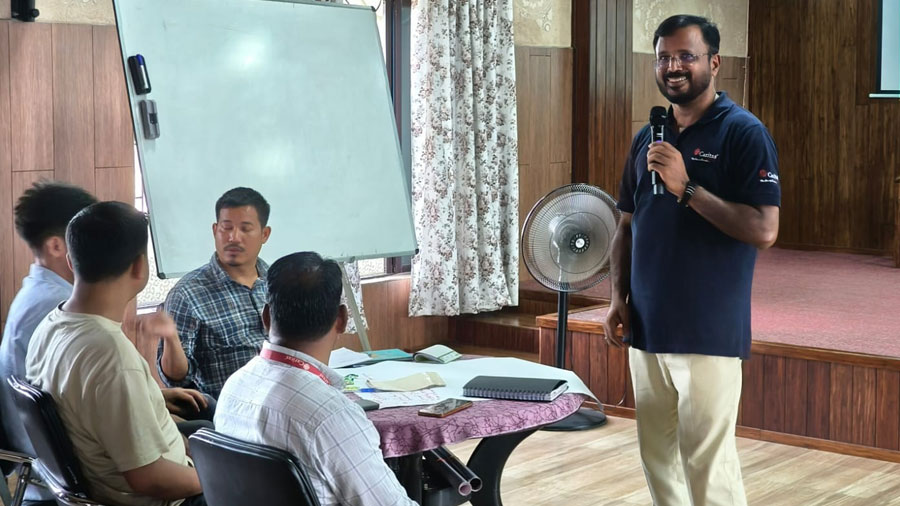
Fr. Benny Edayath, Assistant Director of Caritas India, delivered a special address reminding participants that safeguarding is ultimately a moral commitment, one that begins with the self before it can extend to others. The training was facilitated by a team of six North-East regional trainees, including Mr. Sebastian Thangsha, Ms. Chaya Kalita, Mr. Peter Aind, Mr. Balsin Ch. Marak, Mr. Losii Francis, and Sr. Teresa Ralte, each stepping into the facilitator role as part of the Teach-Back process itself.
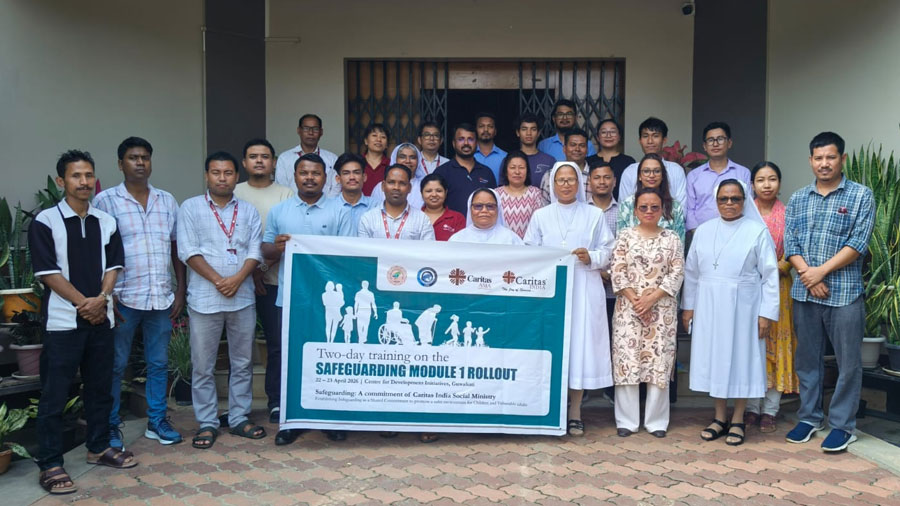
The 27 facilitators trained in Guwahati will now carry the Beginner-level module into their own organisations expanding Caritas India’s safeguarding reach across the North-East through peer-to-peer learning rather than top-down instruction. It is a model built for scale: one trainer becomes many, and the culture of safety grows from within rather than being imposed from outside.
In a sector where safeguarding is too often treated as a box to tick at the start of a project cycle, Caritas India’s expanding programme now reaching across four states and growing making a different argument: that protection is not a department or a policy. It is a culture. And cultures are built one conversation, one facilitator, one changed mind at a time.
Upcoming News
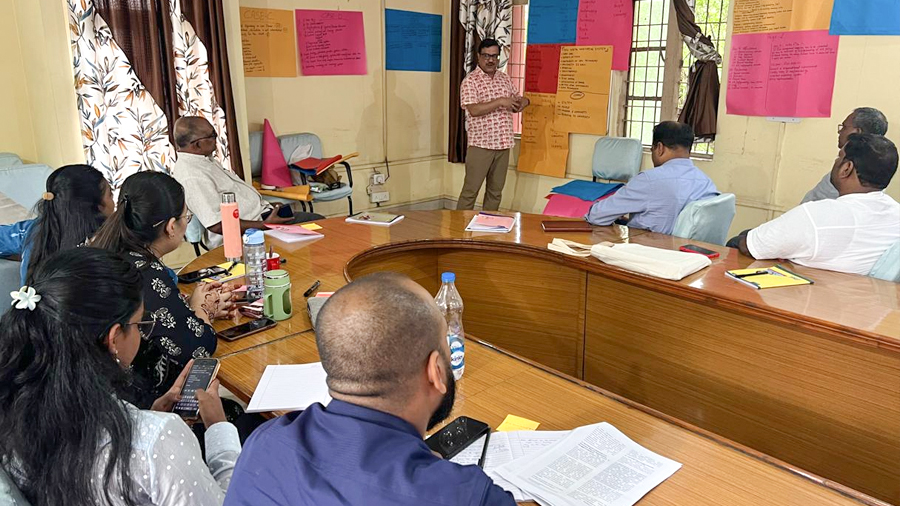
When NGOs Grow, What Breaks First? Caritas India Tackles the Answer in Raipur
Three-day workshop arms executive leaders with governance tools, a 20-policy framework and practical fixes for...
LEARN MORE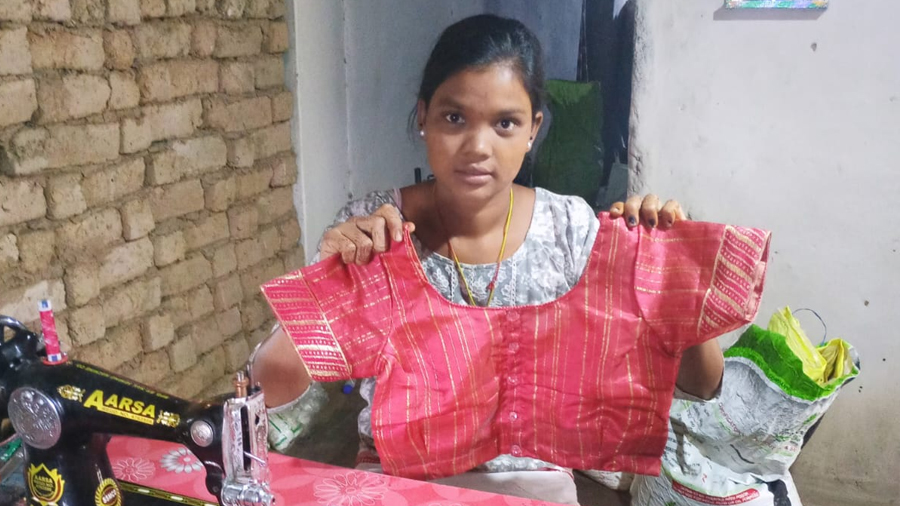
Nine Kilometres Through the Jungle: How Poornima Stitched Her Own Future
For 19 year old Poornima Rawat of Rajamma village in Lailunga block of Chhattisgarh's Raigarh...
LEARN MORE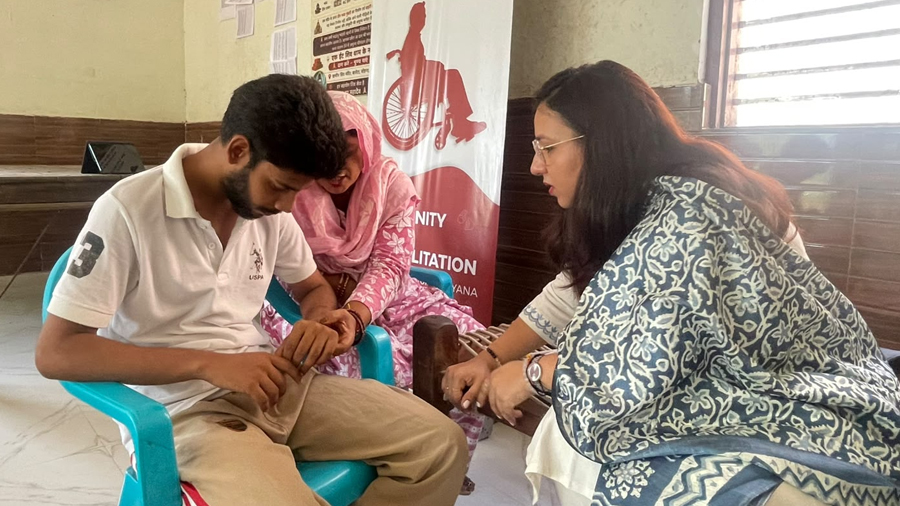
In a Nuh Village, People Living With Mental Illness Finally Got to Speak, and Be Heard
Nine people sat in that room in Barota village, Nuh district, Haryana, each carrying a...
LEARN MORE 91 -11 - 23362735
  director@caritasindia.org


