
 91 -11 - 2336 3390
  director@caritasindia.org
 How Farmers Field School are rewriting the rules of rural Income
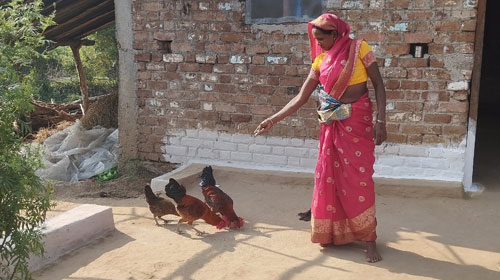
Across rain-dependent farming villages in central India, the seasons have become unreliable narrators. Farmers who once read the sky with reasonable confidence now plant into uncertainty. A delayed monsoon here, a dry spell mid-season there, a harvest that barely covers what went into the ground. For women smallholders managing marginal plots, sometimes without a male earner in the household, one bad season is not a setback. It is a crisis. It is in this context the SAFBIN program introduced something deceptively simple: teach women to raise chickens and build the knowledge infrastructure to make sure it actually works.
The Farmer Field School (FFS) model under the SAFBIN program deployed not merely as a knowledge-transfer mechanism but as a live laboratory for participatory agronomy. Fifty smallholder farmers across 10 villages have been systematically inducted into a backyard poultry enterprise. It is designed to function as a low-input, high-frequency income buffer against the volatility of rain-fed crop agriculture. The logic is rooted in farming systems thinking when primary crop yields are erratic, secondary and tertiary enterprise integration at the household level is not optional, it is a resilience imperative.
What distinguishes this initiative from conventional input-distribution schemes is the centrality of lead farmers as technical anchors within the FFS structure. Mrs. Kranti Kudape of Surajpura and Mrs. Tulsi Paraste of Silpura have not simply adopted poultry rearing they have become de facto extension practitioners, conducting peer-led sessions covering the full technical spectrum of backyard poultry management: breed suitability assessment, chick brooding protocols, vaccination scheduling, biosecurity and shed hygiene, predator exclusion design, and compound feed preparation using locally available inputs such as maize and leftover grain.
Breed selection itself reflects careful agronomic judgment. Farmers were guided toward Kausa, Sonali, and Desi chicken varieties specifically for climate adaptability, low external input dependency, and robust survival rates under semi-intensive backyard conditions. This is not incidental; it reflects a deliberate alignment between genetic stock and the agroecological constraints of the operating environment.
The knowledge architecture built through recurring weekly FFS sessions has produced observable systemic outcomes at the community level. Collective vaccination drives have replaced ad hoc individual interventions, reducing flock mortality risk across participating households. Standardized record-keeping and flock monitoring have introduced rudimentary enterprise management discipline. Cost-sharing arrangements have lowered the per-unit overhead of inputs. Taken together, these community-level practices represent a functional transition from subsistence-level poultry keeping to managed micro-enterprise operation.
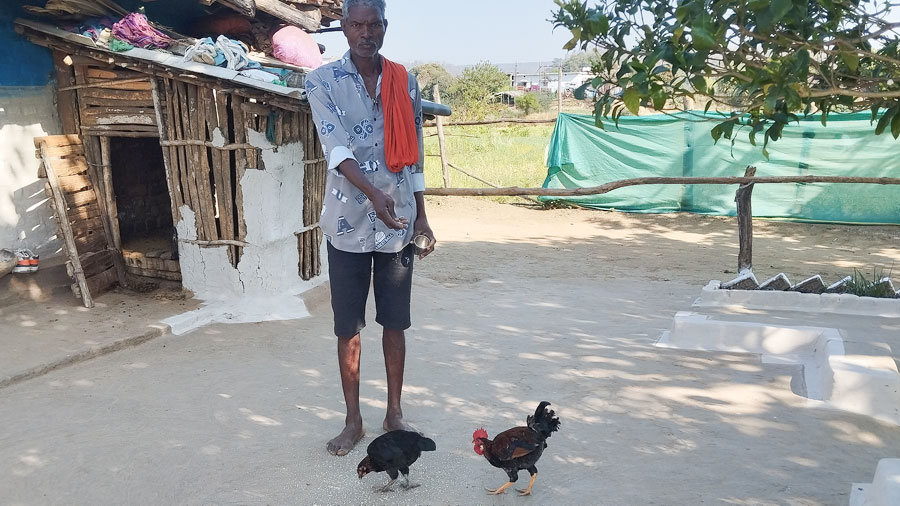
The redistribution mechanism designed into the program structure reinforces this scaling logic. An initial cohort of 20 households received chicks, reared them through a three-month grow-out cycle, and subsequently transferred a new batch of chicks to additional families at zero cost. This peer-to-peer propagation model is technically efficient, it leverages proven management knowledge within the same community context, reduces the risk of failure associated with first-generation adoption, and expands beneficiary reach without proportional program expenditure.
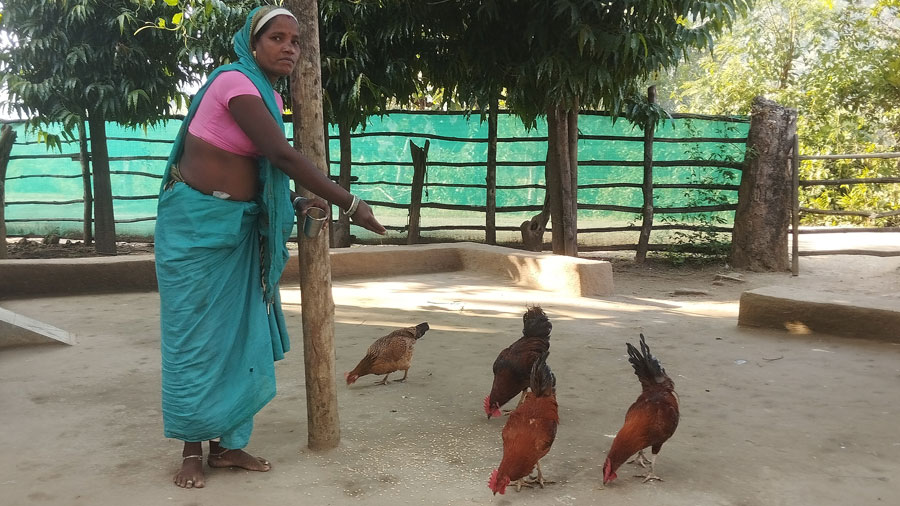
The economic outcomes are measurable. Women farmers report supplementary monthly income of ₹1,000 to ₹1,500, contingent on flock size and local offtake demand. Mrs. Kudape sold surplus birds within six months of initial stocking, generating ₹5,000 in net proceeds income she has since reinvested into flock expansion. Mrs. Paraste earned ₹6,000 in her first full production year, utilizing returns to cover school fees, household expenditure previously contingent on irregular crop sale proceeds.
Beyond income, poultry rearing is delivering measurable nutritional co-benefits. Regular access to eggs and poultry meat is improving dietary diversity and household protein consumption, a critical outcome in regions where micronutrient deficiency remains structurally linked to mono-crop dietary dependence. Additionally, poultry manure is being integrated as an organic soil amendment, reducing inorganic fertilizer expenditure and contributing to soil organic matter, a tangible closing of the nutrient loop within the farming system.
Critically, women’s agency within household decision-making has expanded in tandem with enterprise ownership. Taking responsibility for production management, market transactions, and profit reinvestment has shifted the economic calculus within households is a shift that carries implications well beyond poultry output volumes.
What the SAFBIN backyard poultry model demonstrates is that climate-adaptive livelihood diversification at the smallholder level does not require expensive infrastructure or complex value chain interventions. It requires technically sound knowledge architecture, locally adapted genetic material, community-owned management systems, and lead farmers who can translate agronomic principle into household practice. In villages like Surajpura and Silpura, that translation is already underway.
Upcoming News
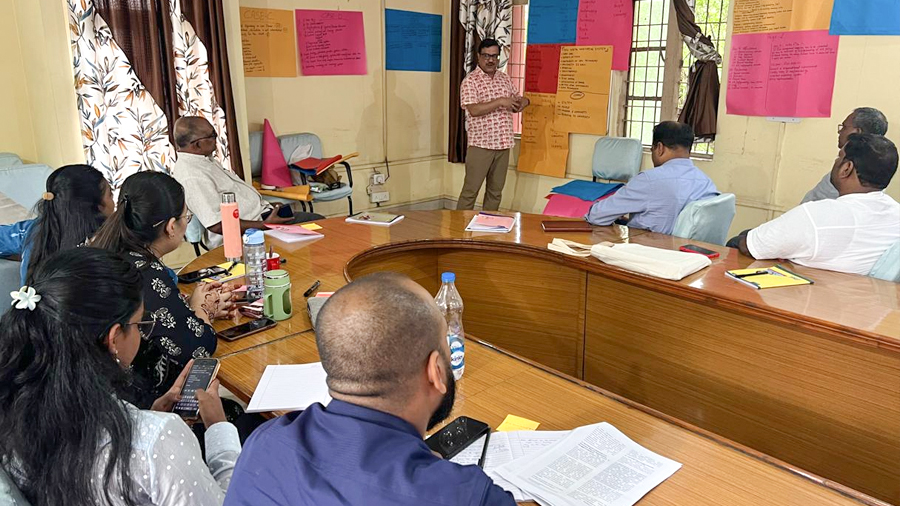
When NGOs Grow, What Breaks First? Caritas India Tackles the Answer in Raipur
Three-day workshop arms executive leaders with governance tools, a 20-policy framework and practical fixes for...
LEARN MORE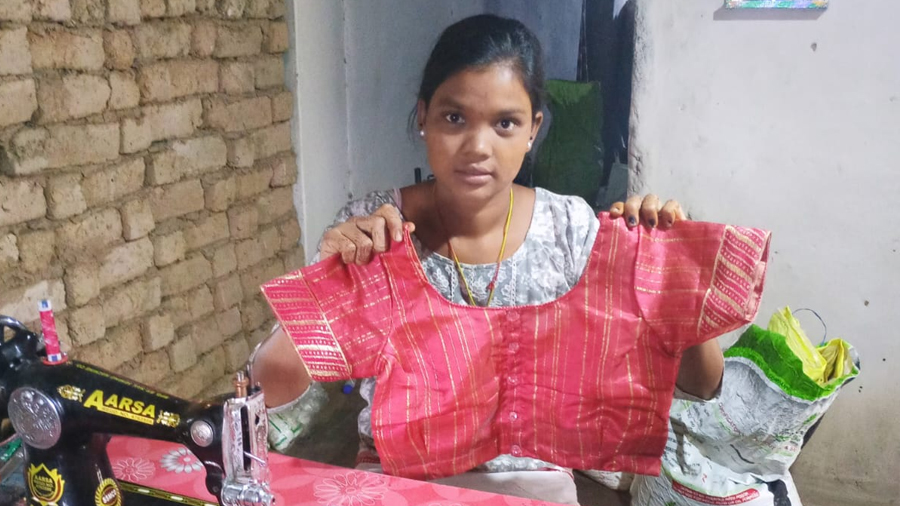
Nine Kilometres Through the Jungle: How Poornima Stitched Her Own Future
For 19 year old Poornima Rawat of Rajamma village in Lailunga block of Chhattisgarh's Raigarh...
LEARN MORE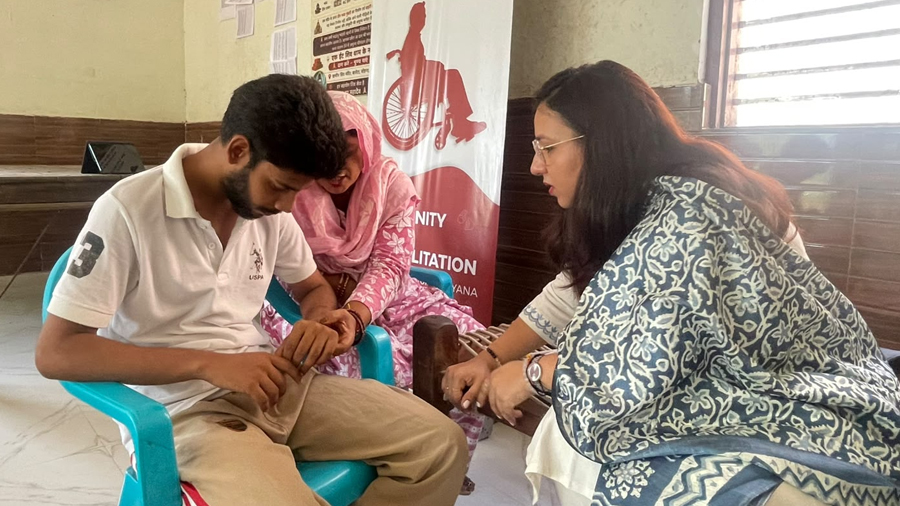
In a Nuh Village, People Living With Mental Illness Finally Got to Speak, and Be Heard
Nine people sat in that room in Barota village, Nuh district, Haryana, each carrying a...
LEARN MORE 91 -11 - 23362735
  director@caritasindia.org


