
 91 -11 - 2336 3390
  director@caritasindia.org
 Children and Mothers Lead Safety Initiative in Kataipali Village
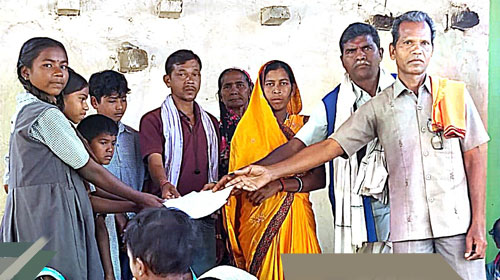
For the residents of Kataipali village, travelling to and from the village had always been difficult and dangerous. The village is connected only by an unpaved forest road that passes deep through a dense jungle area. Locally, the forest is known for frequent elephant movement and sudden attacks, especially during the evening and night hours. Once people entered the forest stretch, there were no nearby houses or settlements where they could seek help, making the journey frightening for children, women, and elderly villagers.
Children from Kataipali crossed this forest road every day to attend school in nearby villages. Many students left home early in the morning and returned before sunset to avoid the risk of encountering wild elephants. During the rainy season, the road became even more difficult due to mud and poor visibility. Villagers often travelled in groups fearing to walk alone through the forest.
“Whenever my children crossed the forest for school, I remained worried until they returned home,” said Phulwati, a member of the Mothers Group. “Even during the daytime, we were afraid because elephant movement could happen anytime.”
The fear increased during evening hours when villagers returning from markets, schools, or work had to cross the isolated road. There had been several instances when villagers heard elephants nearby while travelling through the forest. Since there was no shelter or security arrangement, people had no safe place to wait or seek help during emergencies. Parents constantly worried about the safety of children travelling for education.
Monika, another Mothers Group member, recalled the anxiety faced by women in the village. “The forest road becomes very silent after evening. If somebody gets delayed, the whole family becomes tense because there is no mobile network and no houses nearby,” she said.
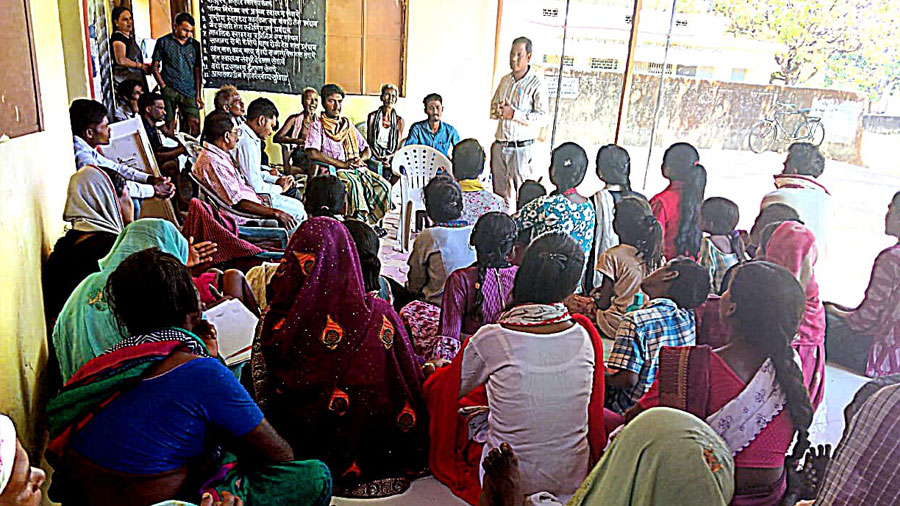
Recognising the seriousness of the issue, the villagers decided to raise the matter collectively before the Panchayat. During preparations for the Republic Day Gram Sabha on 26 January 2026, discussions were held among the Mothers Group and Bal Panchayat members regarding possible solutions. Both groups agreed that immediate support was needed to improve safety for children and villagers crossing the forest road.
The initiative was led jointly by members of the Mothers Group, including Phulwati, Monika, Rajani, and Seema, along with Bal Panchayat representatives such as Manju Rathiya, President of the Bal Panchayat, and Ananya Yadav, Vice President. With support from the Khushaal Bachpan team, the children and mothers prepared a memorandum demanding the appointment of guards and construction of a shelter in the middle of the forest road.
“We discussed the issue together because children were also facing the same danger while going to school,” said Manju Rathiya, Bal Panchayat President. “We wanted a place where people could get help if elephants appeared on the road.”
On 26 January 2026, during the Gram Sabha, the memorandum was formally submitted to the village Sarpanch in the presence of community members and Panchayat representatives. The children and mothers explained how the unsafe road was affecting education, daily travel, and the confidence of villagers. They requested the Panchayat to coordinate with the Forest Department for immediate action.
Ananya Yadav, Vice President of the Bal Panchayat, shared her experience during the meeting. “Sometimes we crossed the forest very quickly because we were scared. We requested the Panchayat to arrange guards so that children could travel more safely,” she said.
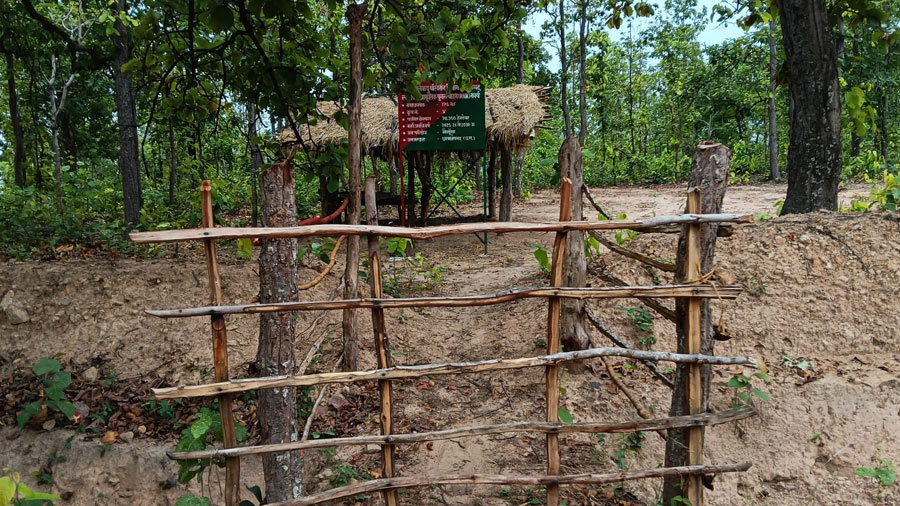
After reviewing the request, the Panchayat forwarded the matter to the Forest Department. The department agreed to construct a shelter near the middle point of the forest road and appoint guards to assist villagers. Within two weeks, construction work for the shed began, and the structure was completed within two months.
By April 2026, two guards had officially started duty near the forest route. Their responsibility included monitoring elephant movement and assisting villagers crossing the area, particularly after evening hours. Villagers travelling after 5:30 PM are now accompanied by guards until they safely cross the forest stretch.
Rajani, a Mothers Group member, described the change after the intervention. “Earlier, people avoided travelling after evening because of fear. Now, at least there is support available on the road,” she said.
Children travelling to school have also reported feeling more confident while crossing the forest area. Parents now allow children to attend classes and activities with less anxiety compared to before. The shelter has also become a resting point for elderly villagers and women travelling through the route.
Today, the initiative stands as an example of collective action led by children, mothers, and community groups. Through the Gram Sabha platform, the villagers of Kataipali were able to raise a long standing safety concern and bring practical improvements to their daily lives. The effort demonstrates how community participation and coordination with local authorities can help address challenges faced by remote rural villages.
Upcoming News
When NGOs Grow, What Breaks First? Caritas India Tackles the Answer in Raipur
Three-day workshop arms executive leaders with governance tools, a 20-policy framework and practical fixes for...
LEARN MORE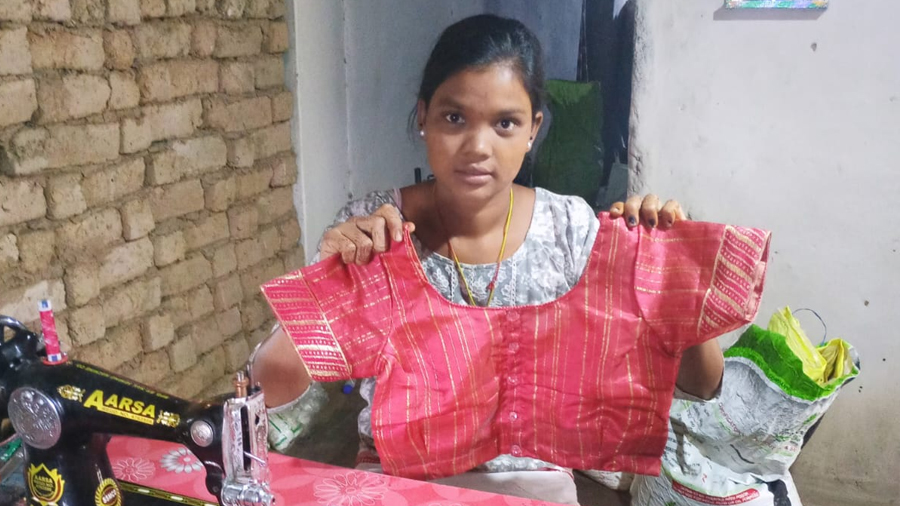
Nine Kilometres Through the Jungle: How Poornima Stitched Her Own Future
For 19 year old Poornima Rawat of Rajamma village in Lailunga block of Chhattisgarh's Raigarh...
LEARN MORE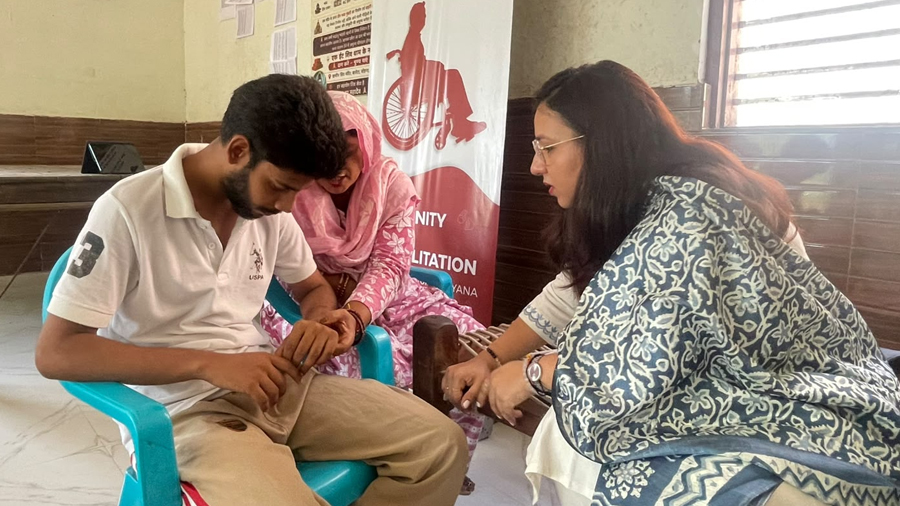
In a Nuh Village, People Living With Mental Illness Finally Got to Speak, and Be Heard
Nine people sat in that room in Barota village, Nuh district, Haryana, each carrying a...
LEARN MORE 91 -11 - 23362735
  director@caritasindia.org


