
 91 -11 - 2336 3390
  director@caritasindia.org
 Seeds That Could Change the Future of Bihar’s Flood-Prone Farmers
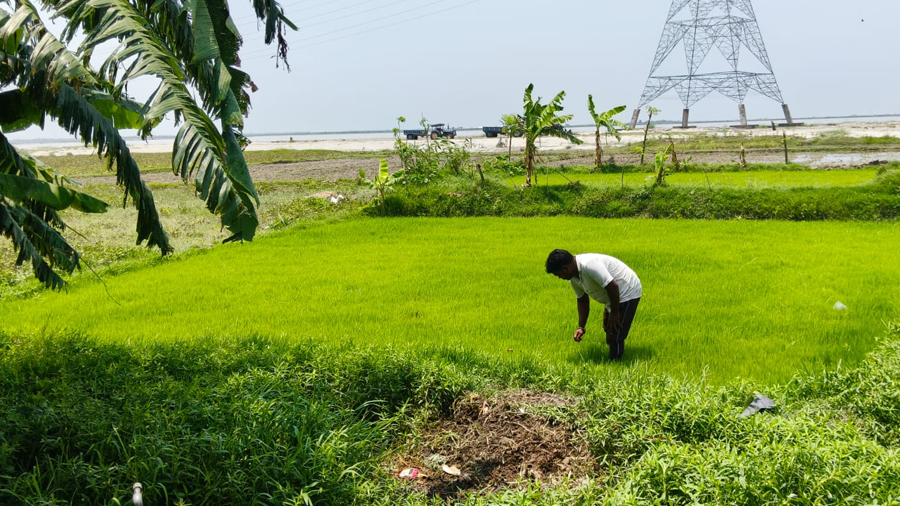
Lal Rai knows exactly what a ruined harvest looks like. His field in Benga Village, Supaul District, sits in a low-lying depression that floods almost every monsoon. For years, he planted the same traditional paddy variety his father grew and for years, when the Kosi River rose and the water came, he watched it die. Not slowly. Quickly, within days, the crop would blacken and collapse beneath the water, and with it, the season’s income and the family’s food.
Lal Rai’s story is not unusual here. The Kosi River, known across Bihar as the ‘Sorrow of Bihar’ drains the Himalayas and fans out across the plains, flooding with a force and frequency that has shaped, and scarred, life in this region for generations. Climate change is making it worse. Rainfall is less predictable, flood events arrive harder and faster, and recovery windows are shrinking. For the small and marginal farmers who cultivate paddy on rented plots with no savings and no safety net, a single submerged crop is not a setback, it is a crisis.
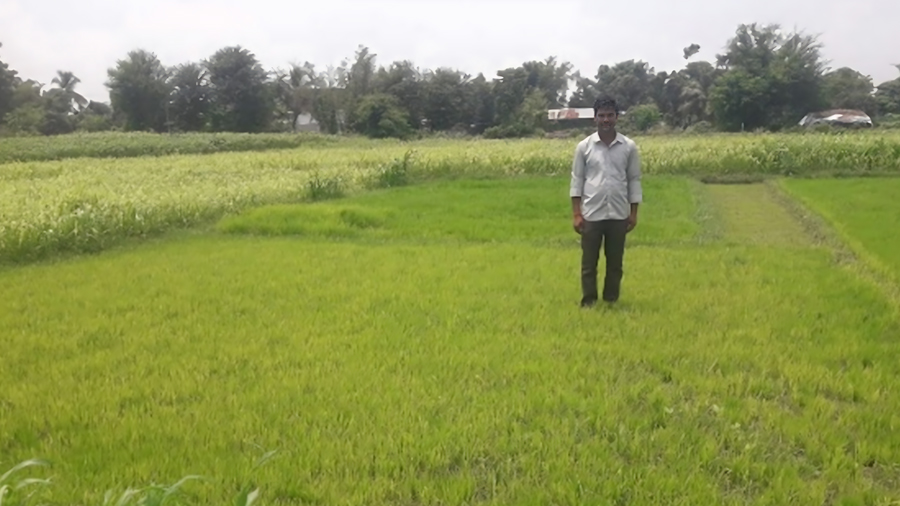
This year, something was different. Before the monsoon arrived, before the first clouds gathered over the Kosi plains, Caritas India’s Strengthening Adaptation, Resilience, and Livelihoods (SARAL), supported by Caritas Italiana was already in Lal Rai’s village. Project teams, working alongside the Krishi Vigyan Kendra (KVK), had mapped which fields flooded and which didn’t. They had identified 150 small and marginal farmers across Kishanpur Block. And they came with seeds.
Not any seeds. For Lal Rai and 24 other farmers whose fields sit in the lowest, most flood-prone ground, the project brought Swarna Sub-1, a paddy variety that can survive complete submergence for up to 15 to 20 days and still yield a viable harvest. For 125 farmers on higher ground, a high-performing variety called BB-11, recommended by KVK, was distributed. Seeds reached farmers between 23 and 25 May 2026. Nursery beds went in from 4 June, with technical teams providing hands-on guidance every step of the way.
“The seedlings are growing very well and look healthy. Since my field is prone to flooding, I am hopeful that Swarna Sub-1 will protect my crop even if floodwaters remain for several days. This gives me confidence for a better harvest.”
— Shri Lal Rai, Farmer, Benga Village, Supaul District, Bihar
When project teams visited the nurseries, what they found was encouraging. Germination rates were excellent. Seedlings were vigorous and uniform, ready for transplantation. Farmers from neighbouring villages had begun walking over to look, asking questions, wanting to know how they could join the next season. In a region where agricultural risk has long felt unavoidable, the sight of healthy nurseries and seeds that actually suited the land was doing something quietly powerful: rebuilding farmer confidence.
That confidence matters more than it might seem. Millions of subsistence farming families across Bihar’s flood plains have no crop insurance, no formal credit, no fallback. The SARAL project’s ambition runs deeper than seed distribution. It is building the foundation for farming communities with deliberate focus on vulnerable households who face the sharpest edge of both climate risk and inequality to diversify their income, develop new skills, and move beyond the knife-edge of a single annual crop. Getting the paddy harvest right is the first step. It is not the last.
Caritas India plans to assess yields at harvest and use the evidence to scale the model across additional flood-prone districts. But the more immediate signal is already visible in the nurseries of Benga Village.
Upcoming News
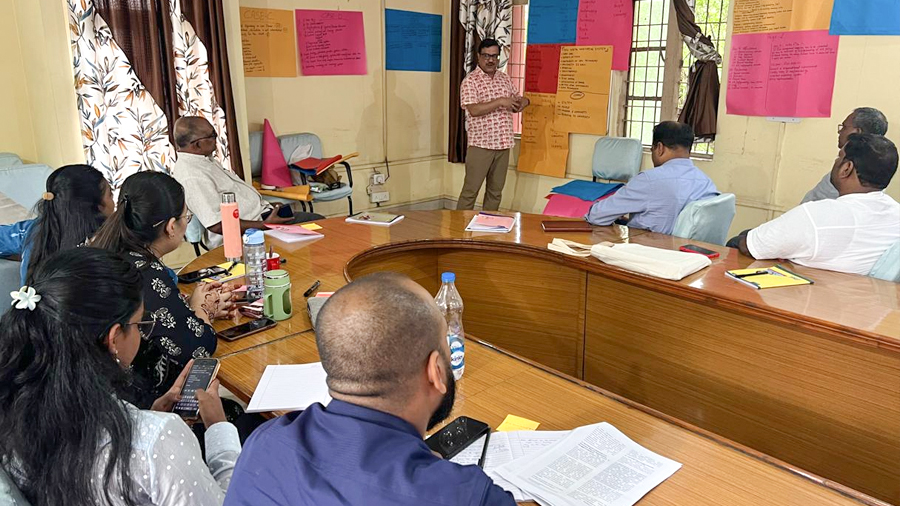
When NGOs Grow, What Breaks First? Caritas India Tackles the Answer in Raipur
Three-day workshop arms executive leaders with governance tools, a 20-policy framework and practical fixes for...
LEARN MORE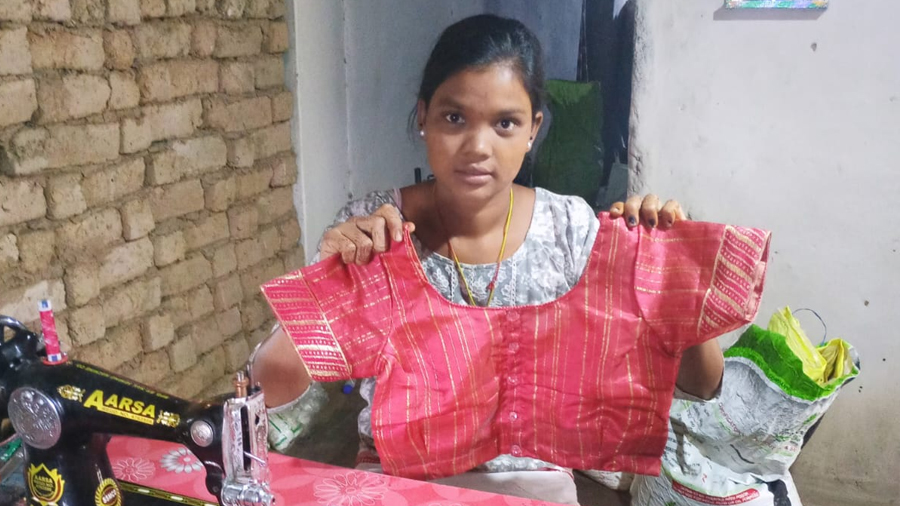
Nine Kilometres Through the Jungle: How Poornima Stitched Her Own Future
For 19 year old Poornima Rawat of Rajamma village in Lailunga block of Chhattisgarh's Raigarh...
LEARN MORE
In a Nuh Village, People Living With Mental Illness Finally Got to Speak, and Be Heard
Nine people sat in that room in Barota village, Nuh district, Haryana, each carrying a...
LEARN MORE 91 -11 - 23362735
  director@caritasindia.org


