
 91 -11 - 2336 3390
  director@caritasindia.org
 Grama Yatra: Walking with Wayanad’s Disaster Hit Communities
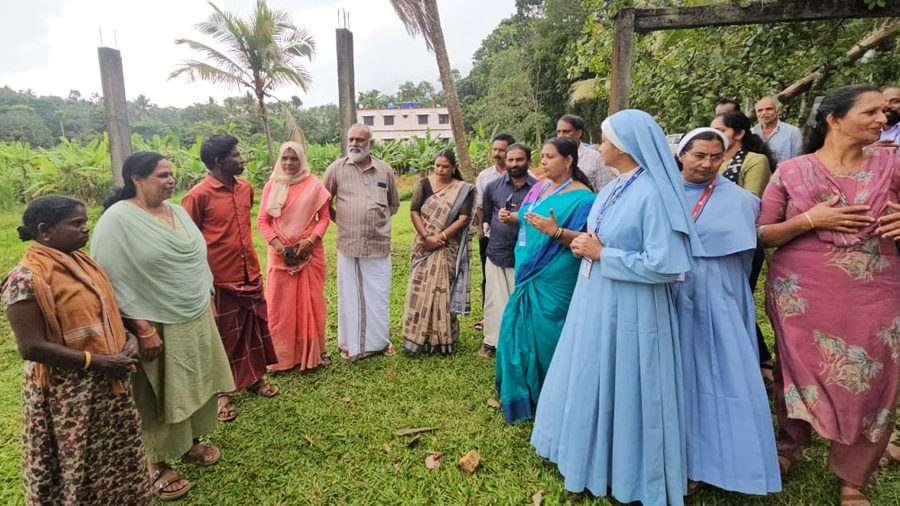
As monsoon clouds gather once more over the Kabani River, a landmark village-by-village Grama Yatra under the Safe Within program uncovers the raw, unhealed wounds of Kerala’s flood-ravaged communities and maps a path forward rooted in community ownership, local leadership, and psychological recovery.
Every year, when the first heavy rains arrive, thousands of families living along the banks of the Kabani River in Wayanad, Kerala, don’t just watch the skies, they brace for the worst. For them, the monsoon is not a season. It is a reckoning. The devastating floods of 2018 and 2019 took away their homes, their livelihoods, and their sense of safety. What the floodwaters left behind was something harder to rebuild: trust, dignity, and the courage to face tomorrow without fear.
It is into this reality that Caritas India, one of India’s most committed humanitarian organisations with decades of experience walking alongside vulnerable communities, has stepped not with blueprints from afar, but by literally walking the ground with the people who live on it.
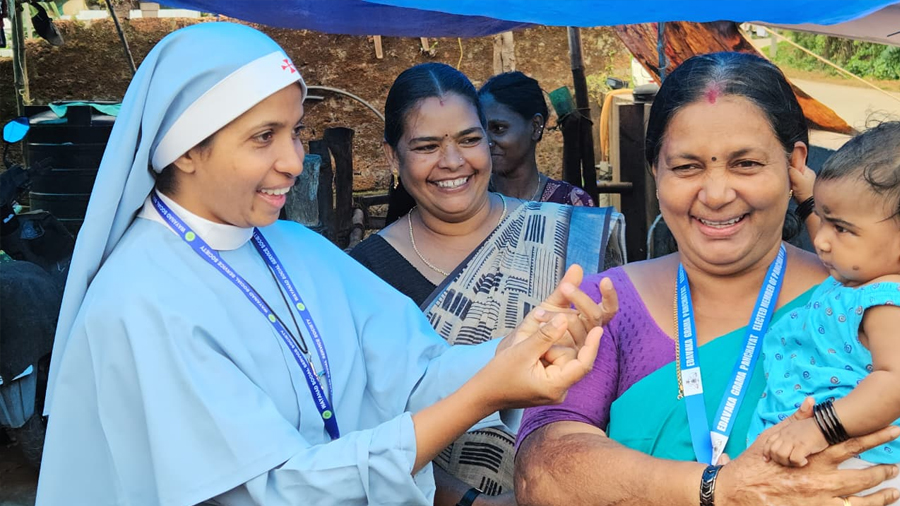
On 24 June 2026, the Safe Within — Reconnect Wayanad & Vilangad Project, implemented through Wayanad Social Service Society, Mananthavady, conducted a landmark Grama Yatra, a structured, immersive journey through twelve disaster-vulnerable villages of Edavaka Grama Panchayat, ahead of the monsoon season. The initiative was undertaken in alignment with the recommendations of the District Disaster Management Committee and brought together Panchayat representatives, Village Disaster Management Committee (VDMC) members, HEART Task Force volunteers, community leaders, youth volunteers, and the Safe Within project team.
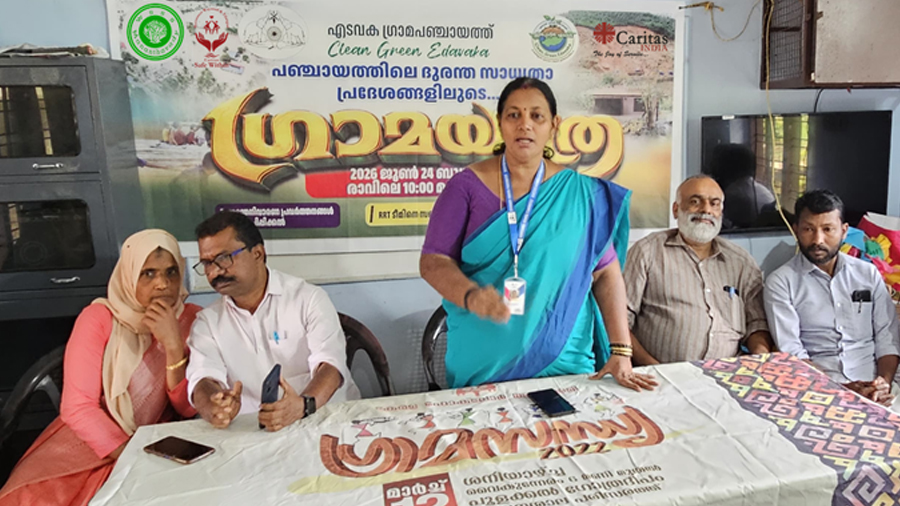
The Grama Yatra commenced at Orappu Day Care Centre, where Mrs. Girija Sudhakaran, President of Edavaka Grama Panchayat, inaugurated the programme with a call for collective action and proactive community preparedness. An awareness session on disaster readiness set the tone but the real learning began once the team stepped out onto the roads and paths of Edavaka.
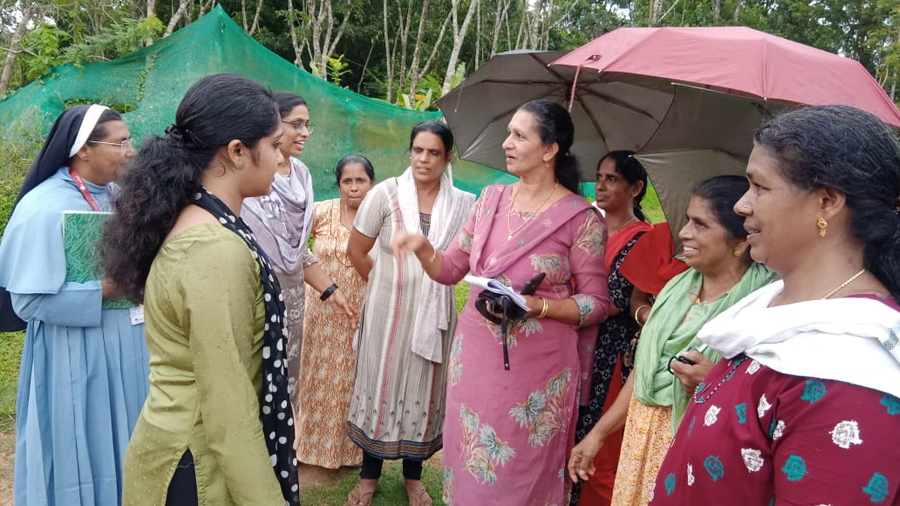
The residents of Orappu shared how they become completely isolated during severe floods. Road disruption delays emergency response critically — rescue teams cannot reach those in need when it matters most. At Kakkancherry, families face recurring floods which damages homes and household assets season after season. They expressed the urgent need of permanent structural support and improved emergency systems. Among the most vulnerable areas were Agraharam where tribal households live near the Kabani River. Stories of repeated displacement, total livelihood loss, and deep psychosocial trauma emerged here. Communities of Valliyoorkavu and Payod expressed the need for strengthening community-based rescue systems and continuous geological monitoring and slope-specific early warning mechanisms. Discussions also revealed the powerful potential of structured youth volunteer networks in risk mapping and emergency response.
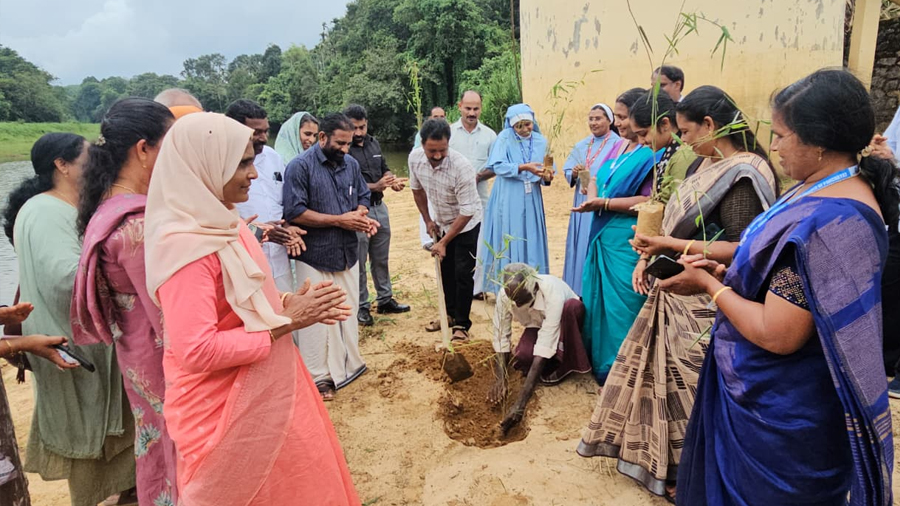
The Yatra concluded at Karinthirikadavu with a symbolic tree plantation, reinforcing that environmental conservation and protection of natural buffers are the first, lowest-cost shield against disaster.
The Grama Yatra served a dual purpose: it was both a solidarity exercise and a rigorous field validation of the project’s Participatory Disaster Risk Assessment (PDRA). Through direct observation and community consultation, the team identified critical risk zones, vulnerable households, evacuation barriers, and existing community resources that can be mobilised during emergencies.
Particular attention was given to those rendered most invisible by disaster systems: older persons, children, persons with disabilities, pregnant women, and individuals requiring medical support — groups whose needs rarely appear in standard relief protocols but who bear the greatest burden when systems fail.
For over six decades, Caritas India has believed that sustainable humanitarian action is not delivered to communities, it is built with them. The Safe Within program embodies this philosophy. Rather than arriving after disasters with aid, it walks with communities before the next one strikes, building preparedness from within, on their own terms, through their own voices and leadership.
What makes the Safe Within program particularly significant is its rare integration of mental health and psychosocial support (MHPSS) within disaster risk reduction, a critical gap in most standard DRR programming in India. The program recognises that a family who has lost everything twice cannot prepare for the third time without also healing from the first two. Resilience, here, is understood as emotional, psychological, and social not only structural.
As Kerala braces for another monsoon, the Grama Yatra reminds us of that building disaster-resilient communities is not an engineering challenge, it is a human one. It begins with the willingness to walk into the most vulnerable places, listen to the people who live there, and stay until real change takes root.
Caritas India’s Safe Within program is proof that the most powerful infrastructure for disaster resilience is built not from concrete, but from community trust, local knowledge, and the quiet, enduring commitment to never leave the vulnerable behind.
Upcoming News
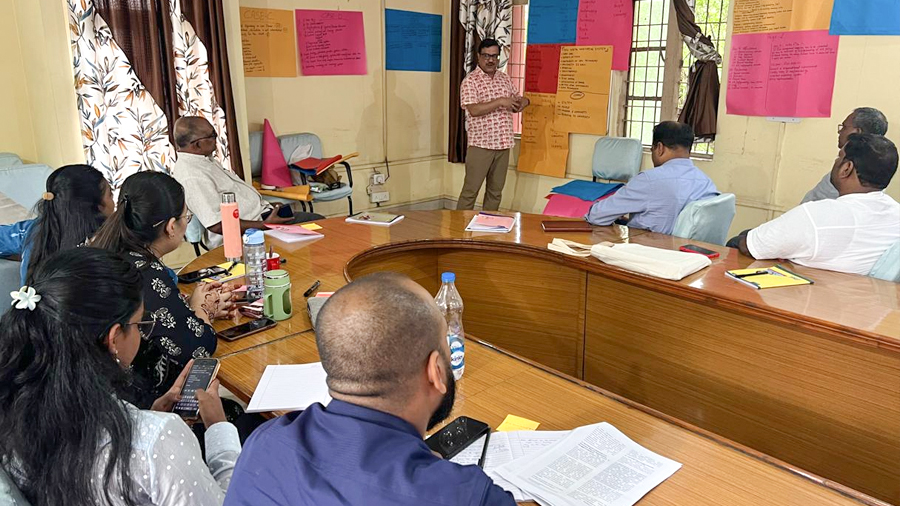
When NGOs Grow, What Breaks First? Caritas India Tackles the Answer in Raipur
Three-day workshop arms executive leaders with governance tools, a 20-policy framework and practical fixes for...
LEARN MORE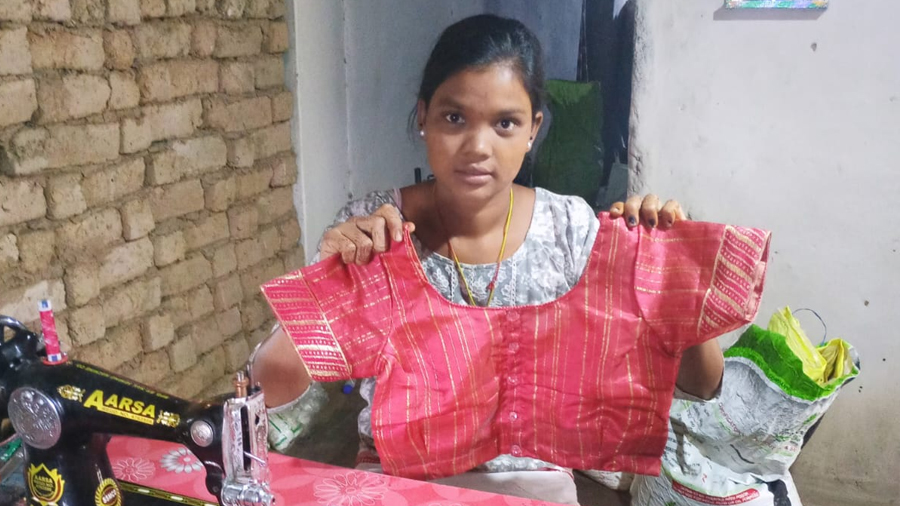
Nine Kilometres Through the Jungle: How Poornima Stitched Her Own Future
For 19 year old Poornima Rawat of Rajamma village in Lailunga block of Chhattisgarh's Raigarh...
LEARN MORE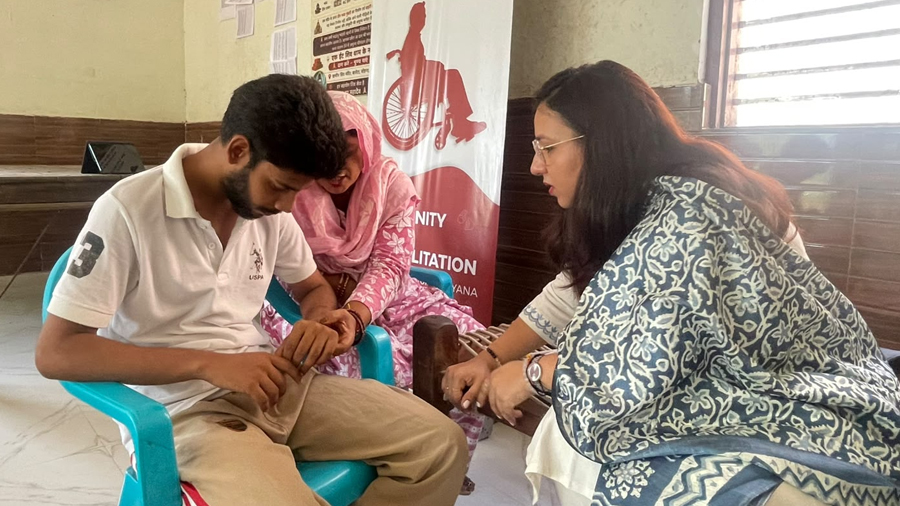
In a Nuh Village, People Living With Mental Illness Finally Got to Speak, and Be Heard
Nine people sat in that room in Barota village, Nuh district, Haryana, each carrying a...
LEARN MORE 91 -11 - 23362735
  director@caritasindia.org


