
 91 -11 - 2336 3390
  director@caritasindia.org
 From Staying at Home to Standing on Her Own: Aarti Vaishnav’s Journey Towards Independence
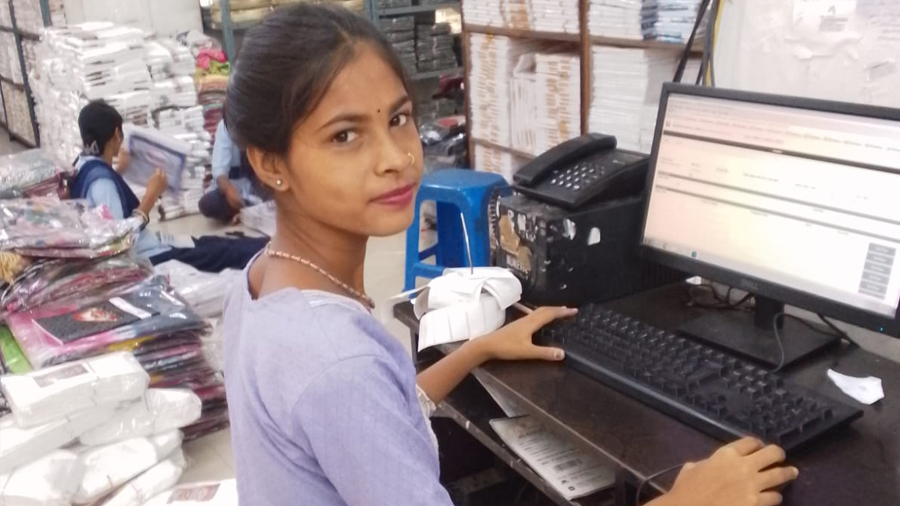
In Alesur village, many young women finish school with dreams they never get to chase. Financial constraints, a lack of career guidance, and the quiet weight of social expectation keep them at home, however capable or willing they are to work. Aarti Vaishnav was one of them.
Aarti lives with her parents, Das and Vimla Vaishnav, and her younger brother. The family gets by on irregular income, stretching every rupee to cover daily needs. After finishing her Higher Secondary education, Aarti hoped to find work and start contributing to the household. Instead, without guidance or resources, she stayed home, helping her mother with chores and depending on her parents even for small personal expenses.
She wanted independence, but she couldn’t bring herself to ask for it. Every time she needed money, for a bus fare, a notebook, anything for herself, she felt the strain it would put on a family already stretched thin. And when she raised the idea of leaving the village for vocational training, her parents hesitated. It wasn’t a lack of belief in her. It was fear: fear for her safety, and uncertainty about what, if anything, waited for her outside Alesur.
That began to change when the Khushaal Bachpan Programme formed a Youth Group in Alesur. Run by Caritas India and supported by Caritas Australia, Khushaal Bachpan works across five districts of Chhattisgarh to make sure children and young people from vulnerable communities grow up safe, educated, and with real opportunities ahead of them, not just in classrooms, but in the choices they’re able to make about their own futures.
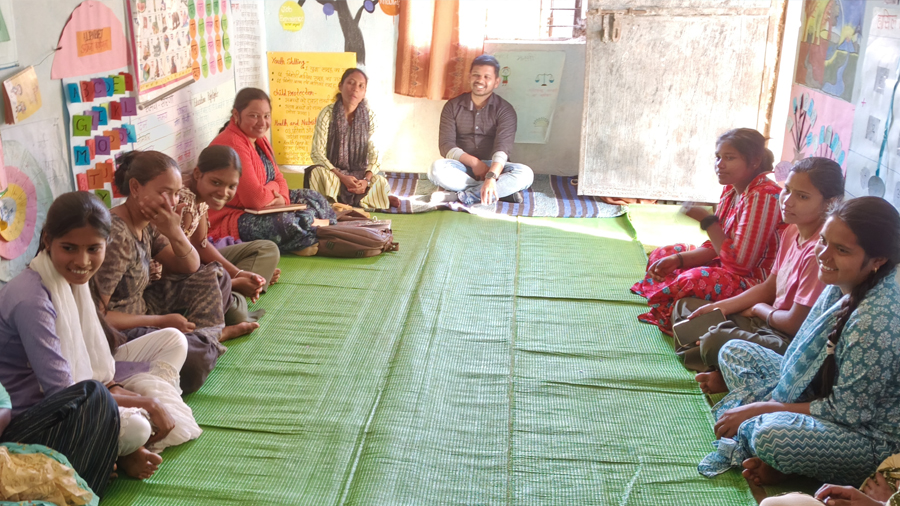
On 6 January 2026, Aarti attended a youth group meeting where the team shared information on government-supported skill training and employment opportunities. For the first time, she said out loud what she’d been holding back that she wanted to train for a skill and build a career. But she was honest about the hardest part too about convincing her family.
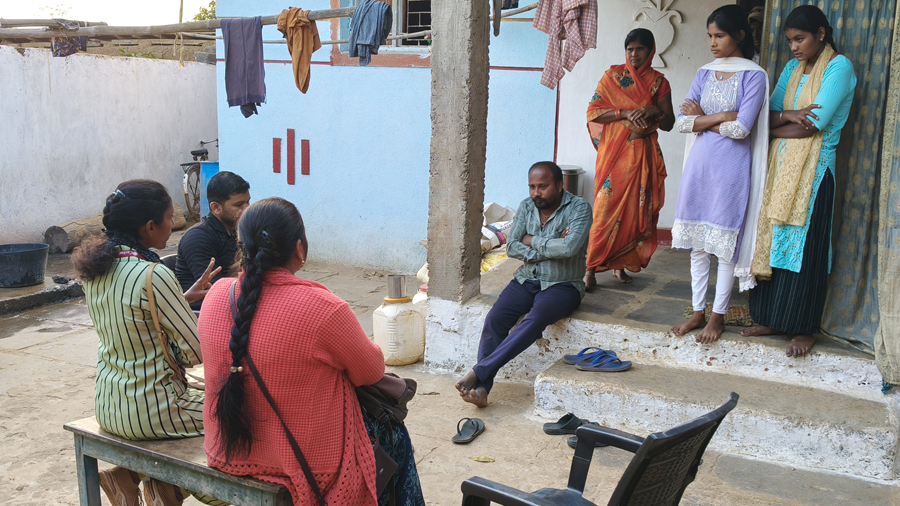
The Khushaal Bachpan team didn’t just take note and move on. The next day, 7 January, Ms. Ruksana (District Programme Associate), Ms. Sarita (Community Educator), and Ms. Geetanjali (Academic Mentor) sat down with Aarti’s parents at their home. They spoke about why women’s economic participation matters, what vocational training could open up for Aarti, and, knowing this was at the heart of the parents’ worry, walked them through the safety measures, residential arrangements, and placement support built into the Deen Dayal Upadhyaya Grameen Kaushalya Yojana (DDU-GKY) training programme.
It took several conversations, but Das and Vimla came around. On 9 January 2026, Aarti enrolled in the Sampling Tailor trade under DDU-GKY. Two days later, the Khushaal Bachpan team personally accompanied Aarti and her parents to the training centre, showed them around, and made sure every bit of the admission process went smoothly, a small gesture that mattered enormously to a family stepping into unfamiliar territory.
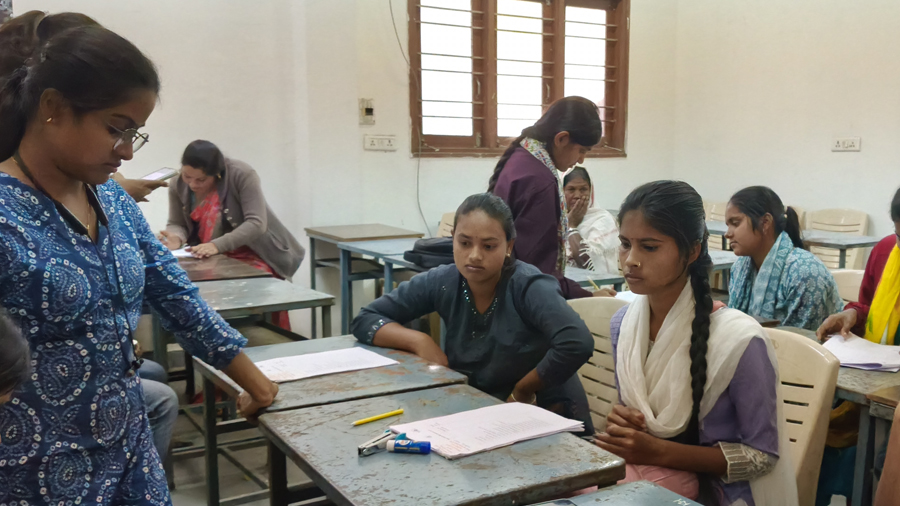
From 12 January to 28 April 2026, Aarti threw herself into training: garment sampling, stitching, embroidery, knitting, quality standards. Alongside the technical skills, the programme worked on her spoken English, computer literacy, workplace communication, and confidence. For a young woman who had rarely left her village, the structured environment did something quieter but just as important: it taught her she belonged in a workplace.
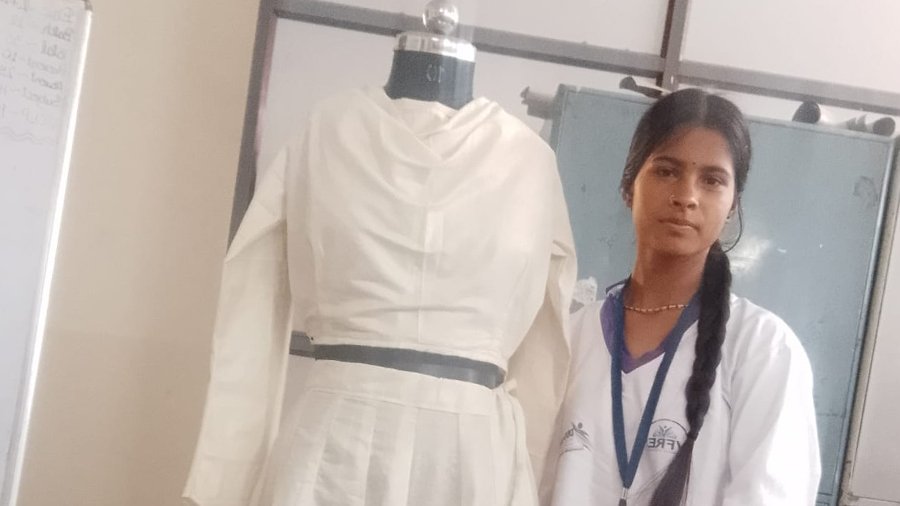
When the course ended, the placement cell got to work. Mr. Dilip Kumar, the institute’s Placement Coordinator, connected Aarti with Sumeet Wholesale Cloth Store in Pandri, Raipur. She walked into the interview and let her training speak for her: her discipline, her practical skills, her composure. The employer noticed, and offered her a position in the Billing Department. On 11 June 2026, Aarti officially joined the workforce.
“Initially, we were worried about sending Aarti away for training because we did not know what opportunities were available,” her father, Das Vaishnav, recalled. “After meeting the Khushaal Bachpan team, we gained confidence. Today, seeing her earn with dignity makes us proud and reassures us that we made the right decision.”
Aarti now earns ₹8,000 a month and puts a share of it toward her family’s household expenses. She no longer has to ask for permission to spend on herself. She’s already looking ahead, planning to continue her higher education alongside her job.
Her mother, Vimla, sees the change most in the everyday moments. “Earlier, Aarti depended on us for every small expense, and we often felt helpless because our income was limited. Now she supports the family, manages her responsibilities confidently, and has become an inspiration for other girls in our village.”
And for Aarti, the shift has been just as much about how she sees herself as what she earns. “There was a time when I believed my future would be limited to household work because I had neither guidance nor opportunities,” she says. “The Khushaal Bachpan team encouraged me, counselled my family, and helped me join skill training. Today I have a respectable job, I support my family, and I want to continue my education while working so that I can achieve even more in life.”
Aarti’s journey is a reminder that unemployment among rural youth is rarely about ability. It’s about access. Access to information. Access to opportunity. And access to the kind of trust and encouragement that lets a family say yes to something unfamiliar.
Through Khushaal Bachpan, Caritas India, with the support of Caritas Australia, continues to work alongside families like Aarti’s, not only to protect and educate children, but to walk with young people as they step from childhood into independence. What began as household counselling and a youth group meeting in Alesur has become a livelihood, a paycheck, and a young woman who no longer waits for permission to dream.
Upcoming News
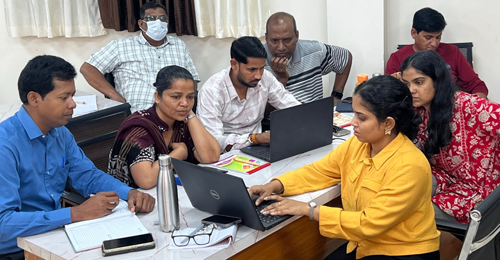
Caritas India Trains Partner Organisations in Evidence Based Project Proposal Writing
Some of the strongest community projects never get built, not for lack of need or...
LEARN MORE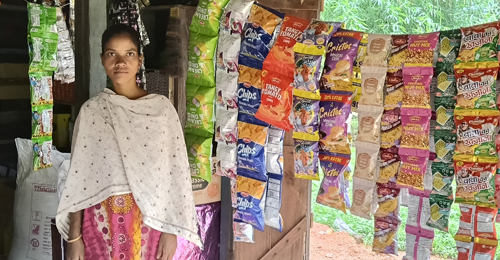
A Grocery Shop, a Mother’s Resolve, and Three Daughters Who Stayed in School
Three young girls in this remote village are attending school regularly today because their mother...
LEARN MORE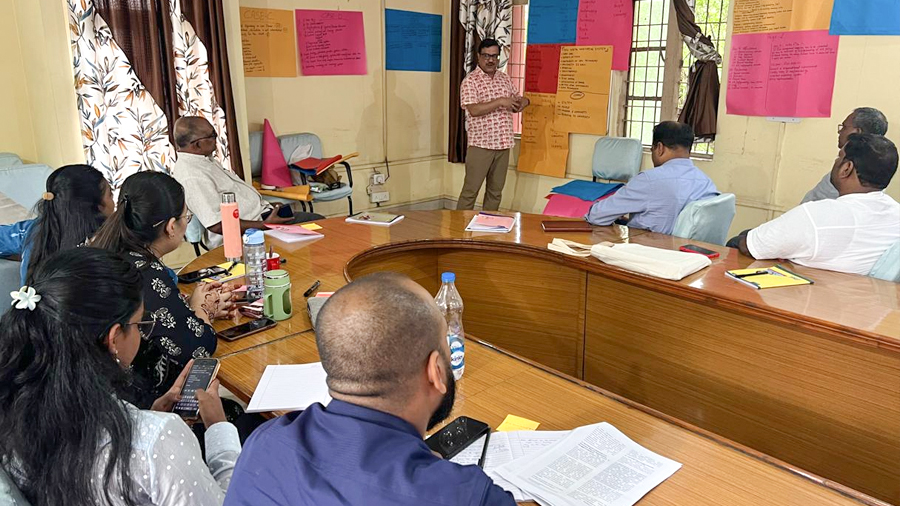
When NGOs Grow, What Breaks First? Caritas India Tackles the Answer in Raipur
Three-day workshop arms executive leaders with governance tools, a 20-policy framework and practical fixes for...
LEARN MORE 91 -11 - 23362735
  director@caritasindia.org


