
 91 -11 - 2336 3390
  director@caritasindia.org
 300 Kerala Youth Step Up as First Responders Across Wayanad and Kozhikode
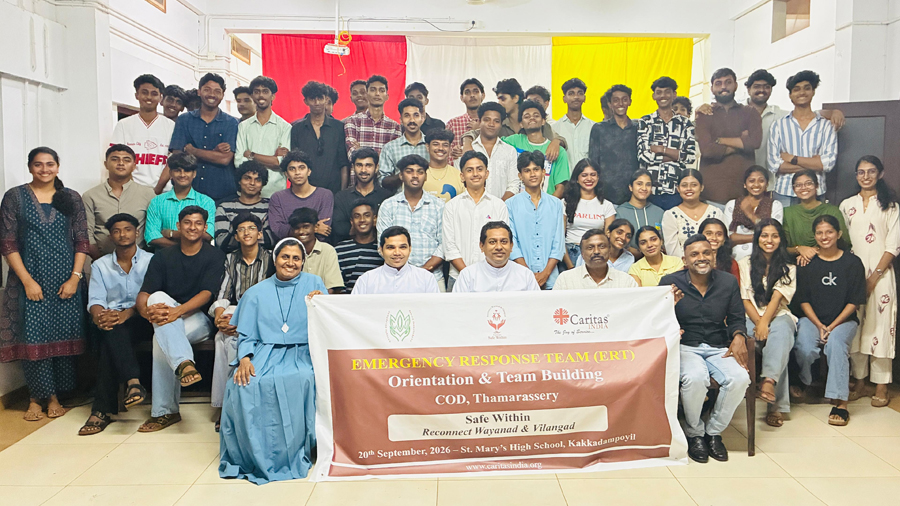
Around 300 young men and women across Wayanad and Kozhikode have stepped into the front lines of community disaster preparedness, establishing a grassroots emergency force through the Safe Within, Reconnect Wayanad and Vilangad project.
Organised by Caritas India alongside Diocesan Social Service Society partners, four dedicated orientation and team building programmes mobilised 75 selected volunteers from each of the four intervention zones. The initiative forms an active community based Emergency Response Team network equipped to deliver rapid search and rescue, systematic evacuation support, first aid, and structured relief coordination right where climate hazards strike hardest.
In northern Kerala, severe weather events are no longer distant possibilities. Changing climatic patterns have brought recurring landslides, flash floods, and cloudbursts to fragile hillside habitations and vulnerable settlements. Recent emergencies in Wayanad and the Vilangad area demonstrated that outside rescue teams often encounter blocked roads, severed bridges, and damaged communication links during the opening hours of a catastrophe. The people living next door are invariably the true first responders on the scene.
Recognising that early local intervention saves lives during those critical golden hours, the project deliberately shifted the focus from passive disaster relief toward proactive, youth led community defence. Selection did not focus on paper credentials. Instead, the initiative brought together young community members who showed a clear willingness to serve their neighbours during crises without expecting personal rewards or social accolades.
The orientation programmes moved away from passive lecture formats, opting instead for practical group dynamics, crisis leadership activities, and team building exercises. Veteran trainer Dr. V.R. Haridas led the practical sessions, transforming individual attendees into cohesive, disciplined operational units capable of functioning calmly under pressure.
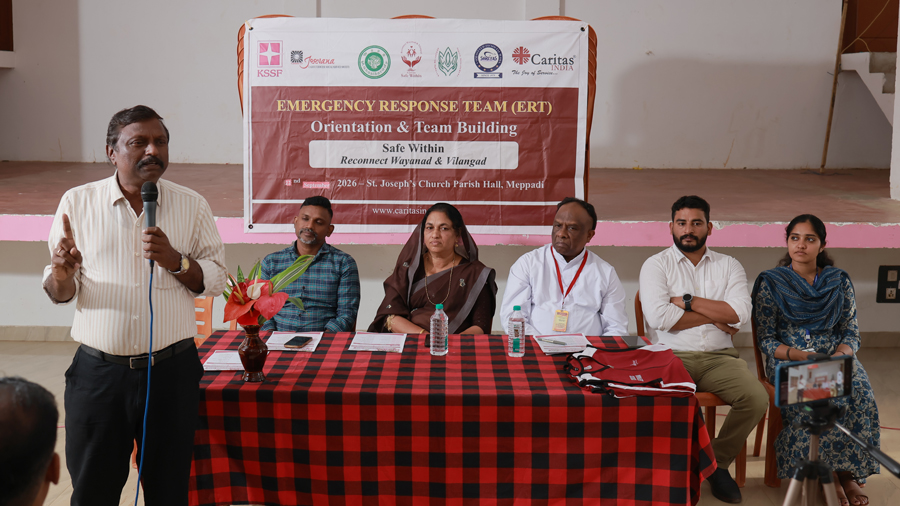
“An ERT member should not wait for someone else to take responsibility during an emergency,” Dr. Haridas shared during the training sessions. “The strength of a response begins with people who are willing to step forward, work together, and serve others when they need help the most.”
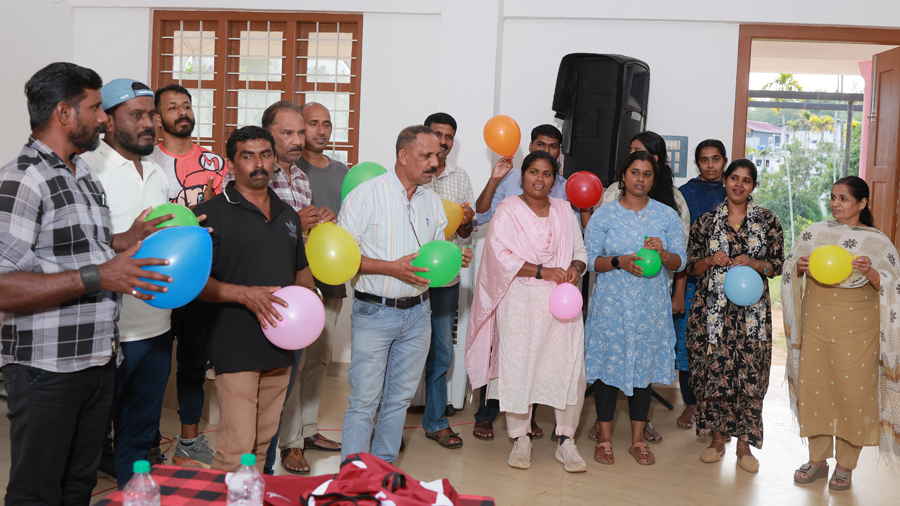
The interactive modules addressed essential leadership principles, peer trust, clear communication under stress, and collective responsibility. Participants explored what makes emergency responders genuinely effective in rural terrains, including an alert presence of mind, local geography awareness, and deep empathy toward elderly residents, children, and persons with disabilities.
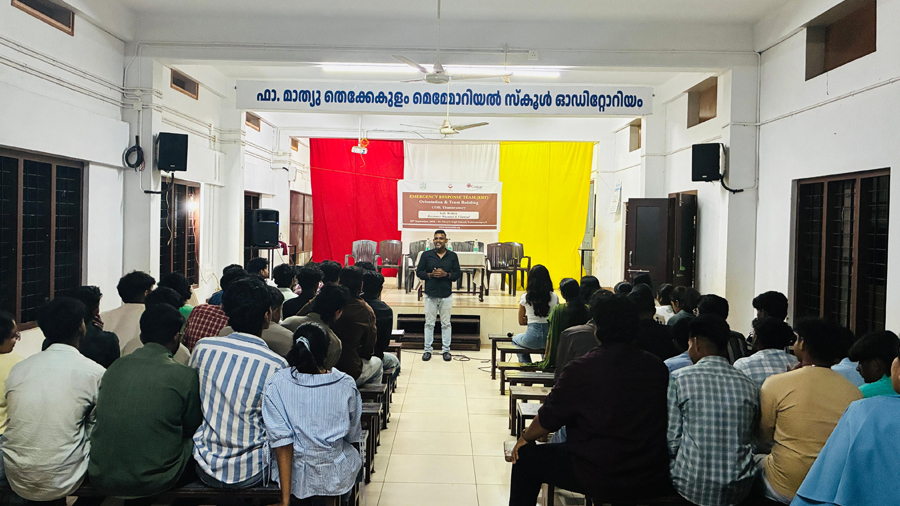
A central outcome of the regional workshops was ensuring that volunteer momentum extends well beyond a single training event. Abeesh Antony, State Programme Associate at Caritas India, facilitated interactive group dynamic modules where the youth drafted a comprehensive, one year operational action plan. This roadmap guarantees that the newly established network maintains regular regional assemblies, technical skill upgrades, and direct involvement in village preparedness drills.
“The real strength of the Youth ERT initiative will not be measured by how many young people attend an orientation, but by how many remain committed to serving their communities when there is a real need,” Abeesh stated. “We want to nurture young people who see volunteering as a responsibility towards society.”
The effort also drew active engagement from local government bodies. Panchayat Presidents, Ward Members, and village elders joined the workshops, welcoming the initiative and committing their official backing to the emerging units. Their presence formalised a crucial operational bridge between citizen volunteers and local self government institutions. When seasonal rain alerts sound, seamless coordination among village panchayats, community bodies, and youth volunteer squads avoids confusion and speeds up targeted early warnings.
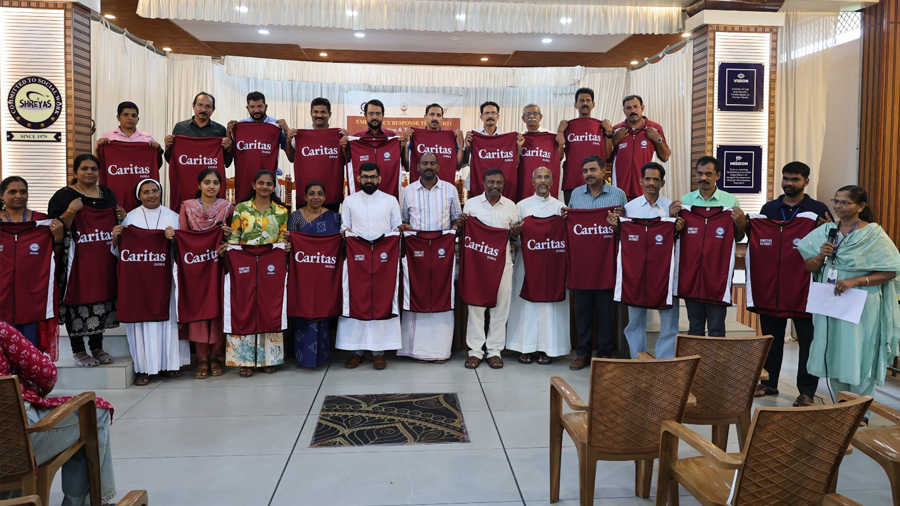
To sustain this community asset over the long term, each project region established clear sub regional teams headed by youth leaders. These squads are tasked with leading community mock drills, maintaining village level hazard maps, and working closely with local self governments to build enduring climate resilience.
By investing in human readiness and civil responsibility, the Safe Within initiative has created an enduring local safety shield. These 300 young volunteers stand prepared to protect their home villages, proving that real resilience begins with empowered communities standing up for one another.
Upcoming News
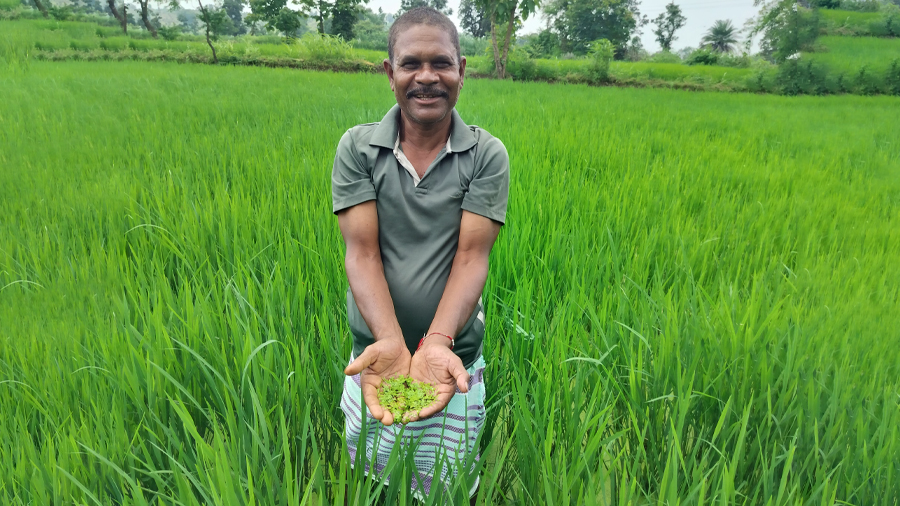
Backyard Aquatic Fern Is Slashing Farming Costs for Tribal Smallholders in Mandla
For tribal smallholders in Mandla, the soaring cost of chemical fertilizers and erratic weather have...
LEARN MORE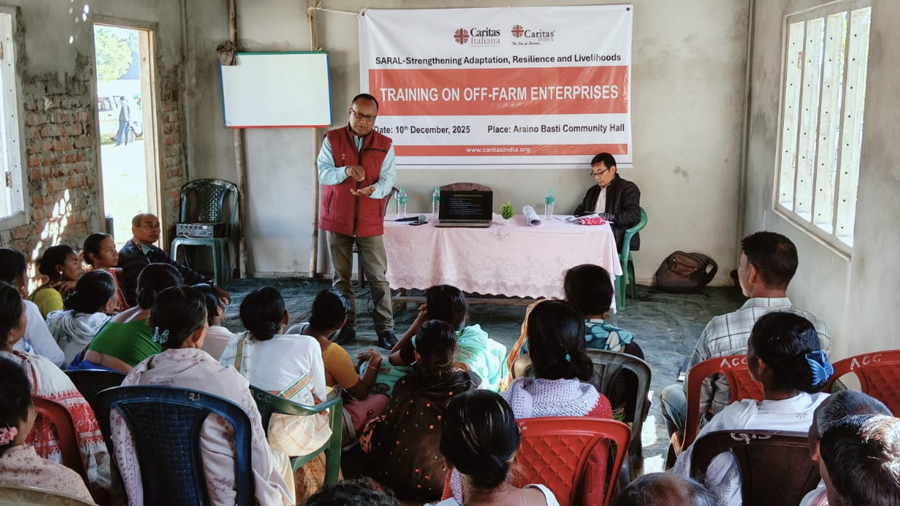
How Livestock Insurance Saved Tripura Farmers from Financial Ruin
For a struggling farmer, the sudden death of a single goat is not just bad...
LEARN MORE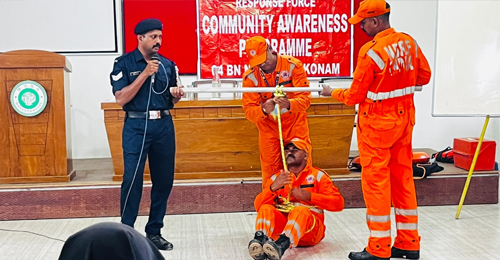
Ropes and Sacks Become Lifesaving Tools as NDRF Trains Wayanad’s First Responders
Long before an ambulance can reach a flooded village or a landslide hit hillside, it...
LEARN MORE 91 -11 - 23362735
  director@caritasindia.org


