
 91 -11 - 2336 3390
  director@caritasindia.org
 How Silpura’s Farmers Defeated Drought with Sandbags innovation
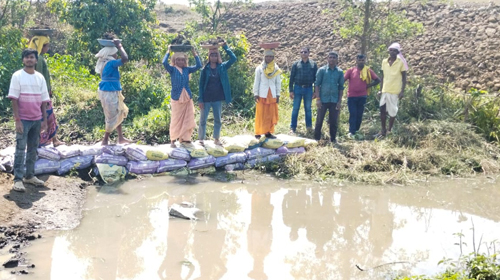
As a relentless heatwave pushes temperatures past a deadly 45 degrees Celsius across parts of India, a small farming village is pulling off a minor miracle. While the United Nations climate report warns that the country’s worst climate stresses are still to come and monsoon rains feel like a distant dream, the farmers of Silpura village refuse to surrender to the water scarcity gripping the nation.
Instead of leaving their cracked, parched fields empty this summer, the community has banded together to build a low-cost sack bag dam across a small seasonal stream. Supported by the Smallholder Adaptive Farming and Biodiversity Network (SAFBIN) of Caritas India funded by Caritas Austria, this simple grassroots structure has transformed 12 acres of historically barren summer land into a thriving oasis of green gram and black gram, securing food and income in the dead of drought.
Silpura in Madhya Pradesh experiences a decent amount of annual rainfall, totaling around 1,350 to 1,392 millimeters. However, almost all of this rain is packed into just a few months between July and September. Because the village has low groundwater levels and no reliable irrigation systems, the water quickly disappears once the monsoon ends, leaving the land dry and barren by spring.
This predictable water scarcity has long created deep ecological stress and worsened social inequalities. It heavily impacted the village’s women and children who had to bear the physical burden of walking far distances to collect water.
The turning point arrived on March 22, which is celebrated globally as World Water Day. Encouraged by the project field coordinators, the villagers realized that while major rivers were miles away, their local seasonal stream had the potential to secure their survival if managed properly. Rather than waiting for expensive government infrastructure projects that often take years to build, they decided to take climate action into their own hands.
The solution was simple and very inexpensive. The community designed a temporary check dam constructed entirely out of 65 used cement bags filled with local soil and sand. The final structure measured 23 feet in length, 3 feet in height, and 3 feet in width.
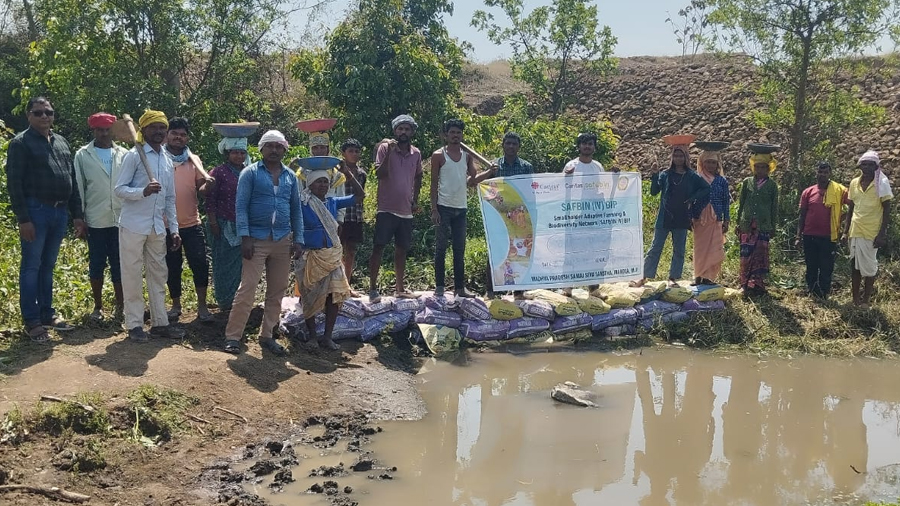
A collective workforce of 20 villagers, including eight women, gathered at the stream bank and completed the entire structure within a single day. By working together on a voluntary basis, the total estimated cost of the materials and labor came out to just about Rs. 4,300. The dam successfully stopped seasonal runoff, trapping precious water that would have otherwise quickly evaporated under the blistering summer sun.
The quick rise in the local water table allowed the village’s Farmers Field School, a local agricultural learning hub set up by the project, to completely change their summer crop calendar. For the first time in many years, ten local farmers sowed summer pulses on 12 acres of land that usually sits completely abandoned during the dry months. To maximize the stored water, the local Agriculture Department stepped in to provide 5 kilograms of green gram seeds to each farmer. They also supplied micro-irrigation pipe networks and sprinkler sets to six households to ensure that not a single drop of water was wasted.
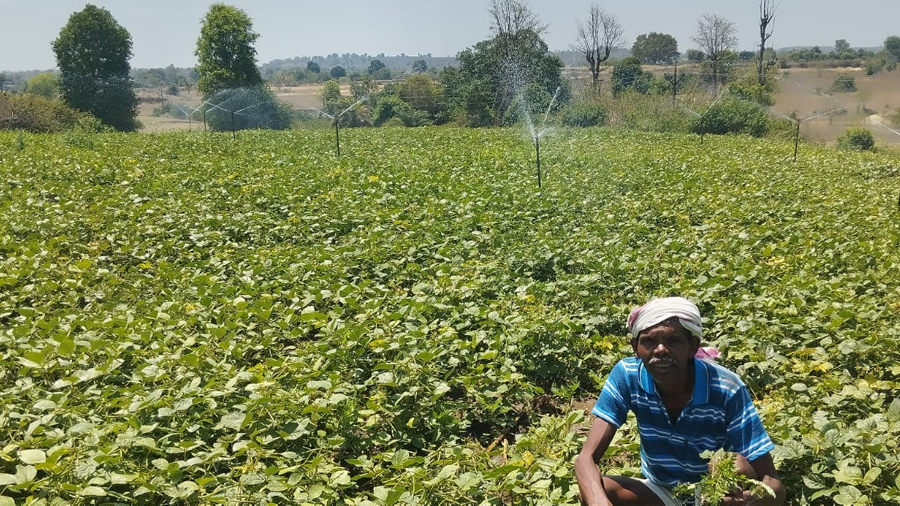
Mr. Parsadi Lal Tilgam, a member of the local Bajrang smallholder farmers collective, shared his excitement about the project. He explained that through the collective efforts of the farmers, the sack bag dam stored a good amount of water by March. With guidance from their field school, he cultivated green gram for the first time and used pipeline and sprinkler irrigation from the reservoir. He noted that this experience successfully increased his income, improved soil fertility, and enhanced water availability in his home area.
Beyond water access, the program equipped the farmers with sustainable organic farming techniques to revive the local ecosystem. Moving away from expensive chemical fertilizers that degrade soil under high heat, the farmers manufactured and applied native organic mixtures. They used Jeevamrit, which is a natural microbial soil booster, and Dashparni, a natural plant-extract pest repellent.
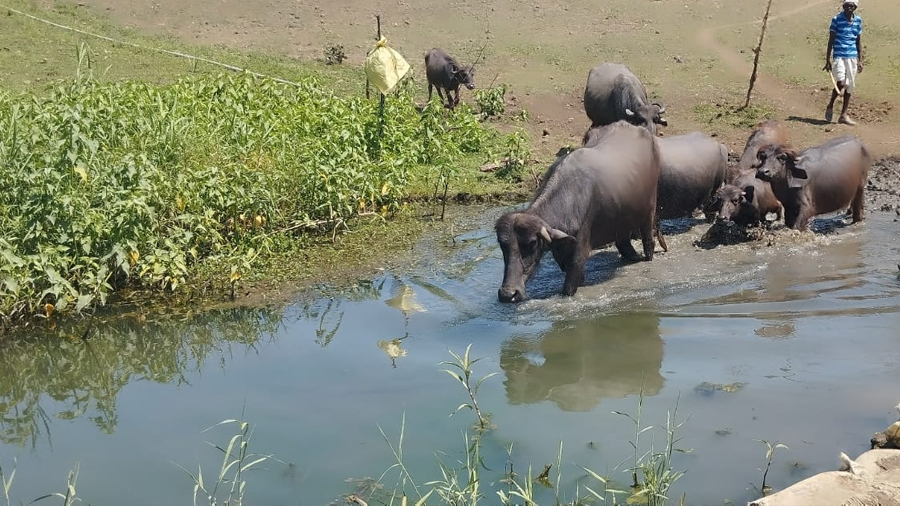
The impacts of this small intervention have rippled far beyond the boundaries of the crop fields. The newly formed reservoir has become a critical watering station for roughly 300 cattle belonging to 50 families in the village, keeping the animals healthy through the worst of the heatwave. Furthermore, because Silpura borders a local forest corridor, wild animals have begun regularly visiting the reservoir to drink, providing a vital sanctuary for local wildlife during an unforgiving dry season. Even the soil benefits directly, as cultivating pulses acts as a natural green manuring process that fixes nitrogen back into the parched earth.
As the summer harvest approaches, the ten participating farmers are anticipating an exceptional yield of nearly 6 quintals of pulses per acre. In a season where their income was historically zero, these families are now looking at a lucrative economic cushion that restores their confidence and hope. By blending traditional community wisdom with targeted technical support from Caritas India and Caritas Austria, Silpura has provided an inspiring example for climate adaptation. They have proven that protecting a community does not always require massive funding, but rather collective determination, a seasonal stream, and a few sacks of earth.
Upcoming News
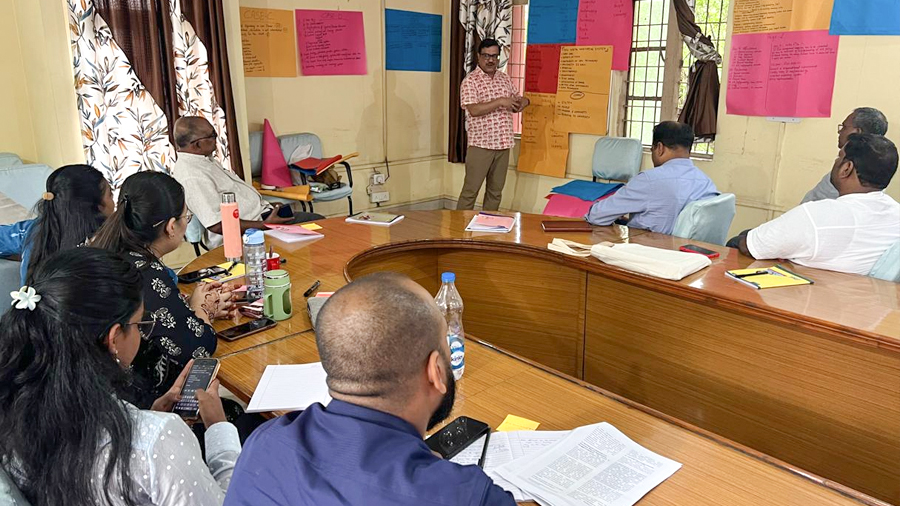
When NGOs Grow, What Breaks First? Caritas India Tackles the Answer in Raipur
Three-day workshop arms executive leaders with governance tools, a 20-policy framework and practical fixes for...
LEARN MORE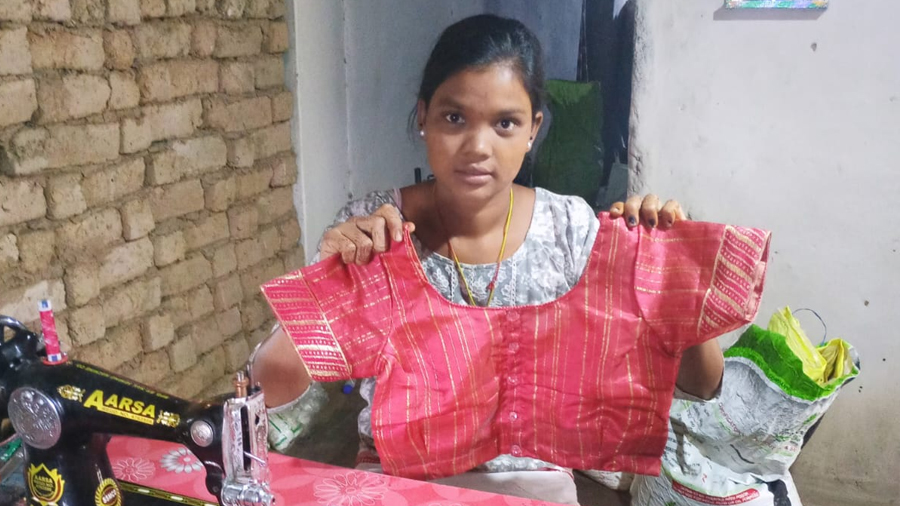
Nine Kilometres Through the Jungle: How Poornima Stitched Her Own Future
For 19 year old Poornima Rawat of Rajamma village in Lailunga block of Chhattisgarh's Raigarh...
LEARN MORE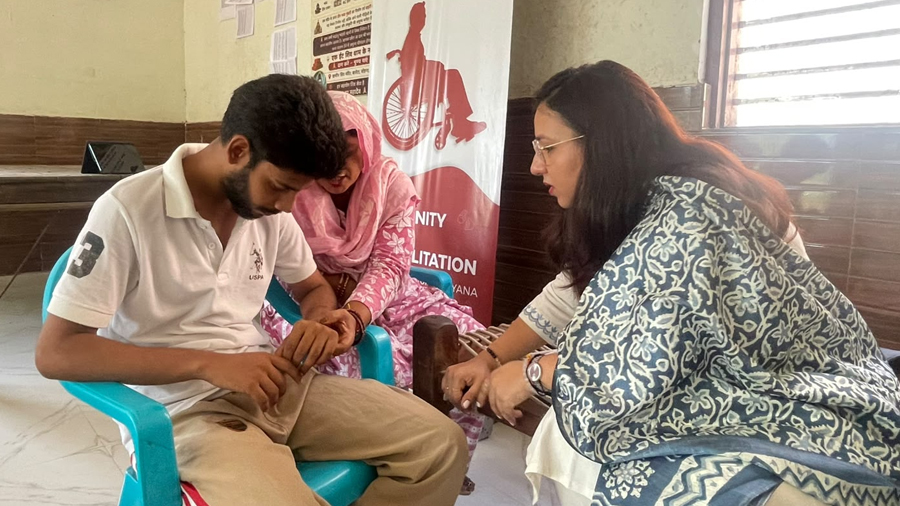
In a Nuh Village, People Living With Mental Illness Finally Got to Speak, and Be Heard
Nine people sat in that room in Barota village, Nuh district, Haryana, each carrying a...
LEARN MORE 91 -11 - 23362735
  director@caritasindia.org


