
 91 -11 - 2336 3390
 director@caritasindia.org
Newly recruited disaster management professionals of West Bengal oriented on inclusion in DRR
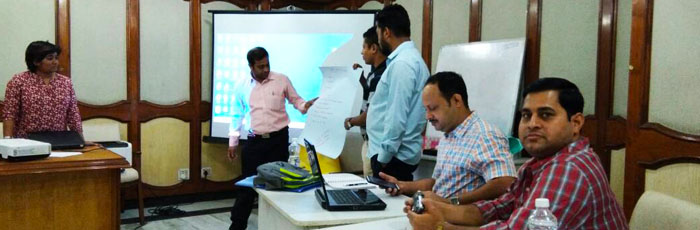
Caritas India orients the newly recruited disaster management professionals of the State of West Bengal on “Issues related to inclusion in DRR”, on 3rd May 2017 at Banga Bhawan, New Delhi.
People’s vulnerability to natural hazards, or their capacity to cope, manage and respond to disasters is dependent upon different social, economic, cultural and political processes that influence how hazards affect people in varying ways and with differing intensities.
There is a greater need to adopt inclusive approach to ensure effective disaster risk reduction (DRR). In this regard, a training was organised by the UNDP for the Govt. of West Bengal. Ms. Lee Macqueen, Manager-Advocacy, conducted the session for the Disaster Management Professionals of SDMA and DDMA, sensitising them to pre-existing multidimensional vulnerabilities of marginalised communities.
Stress was laid on integrating DRR components into panchayat plans, and utilising the gram sabhas to encourage marginalised sections to participate in decision making process, and identifying their socio-economic vulnerabilities that expose them to hazards, in addition to physical and environmental risk factors.
It was emphasised that Social inclusion involved ‘deliberate’ actions to include the poor and excluded communities in accessing opportunities, resources and entitlements for building resilient lives and hence, the need to plan and work before disasters. This includes mapping of ‘communities’ at risk, recording their assets and belongings, and awareness creation on rights and entitlements.
Equity need to be the epicentre of DRR planning, prioritising the women, children, elderly, disabled, transgender, PLHIV/AIDS of socially marginalised communities, which in India are mostly Dalits, Tribals and OBCs by virtue of their social positioning and ensuing fragile livelihoods and access to other public services.
Lastly, the officials demonstrated how social inclusion could be operationalised in disaster management through a group exercise on vulnerability mapping.
Upcoming News
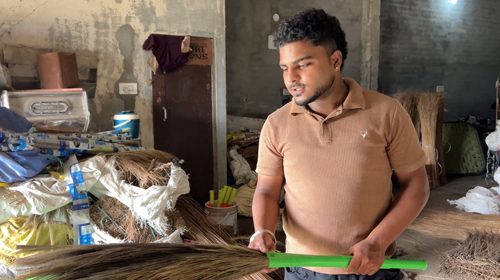
Sumit’s Reintegration Journey Back to Kaithal
When Sumit finished his 12th standard in Kaithal, Haryana, the world beyond his village seemed...
LEARN MORE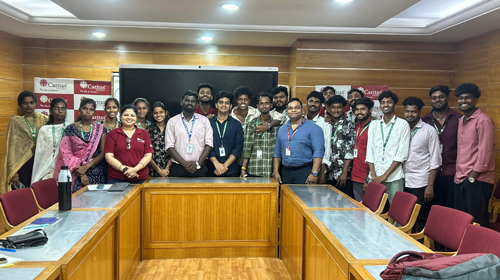
Learning Social Work Beyond the Classroom at Caritas India
It is one thing to read about social work in a textbook and another to...
LEARN MORE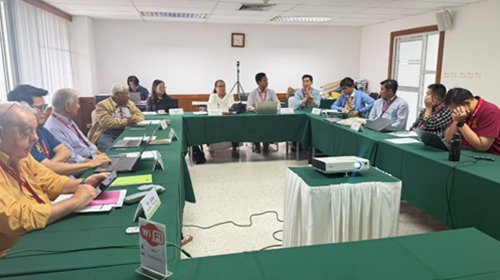
CAMBIT Brings Caritas Together in Bangkok
At a regional meeting in Bangkok from 24 to 25 September 2026, Caritas India reaffirmed...
LEARN MORE 91 -11 - 23362735
 director@caritasindia.org


