
 91 -11 - 2336 3390
  director@caritasindia.org
 Preparing humanitarian workers to develop strategic plan for ECO-DRR
“Environmental degradation is a significant factor that reduces the adaptive capacity of societies to deal with disaster risk in many countries,” says World Risk Report 2012.
In the recent decade’s occurrence of natural disaster like earthquake, cyclones, floods and landslides had greatly increased. These disasters are not purely metrological and geographical in nature but also due to inappropriate use of our ecosystem and rapid urbanization.
Ecosystem-based disaster risk reduction (ECO-DRR) project was launched by Caritas India in 2015 in Uttar Pradesh (UP), Uttarakhand (UK) and Himachal Pradesh (HP) to strengthen natural infrastructure and human resilience against hazard impacts. These states are prone to natural disasters in the recent past.
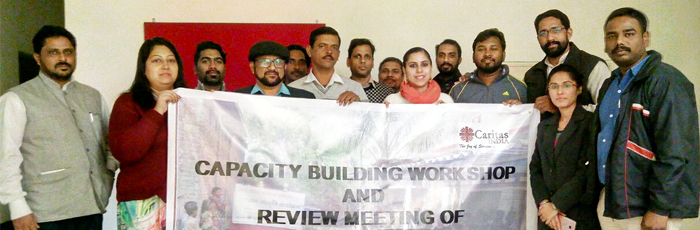
Recently, seven partners from UP, UK and HP were capacitated on development of strategic plan of ECO-DRR on December 13-16, December 2016.
Technical – DRR, Mr. Anjan Bag of Caritas India facilitated the participants on development of strategic plan on three aspects of natural stock, community preparedness and livelihood based on their thematic areas. Participants amended their statements based on the input provided.
Participants were also explained on the quality reporting and documentation aspect of the programme. The narrative reporting and its requirement/expectation were shared with the coordinators to enhance the quality of reports.
The training followed by the review meeting of the programme to monitor and evaluate the progress in the respective regions. Quality inputs were given to the partners on their report based on the output indicators against each outcome. The partners made necessary amendment in their MIS, LFA, Narrative report and PDRA analysis.
Inclusion of qualitative and quantitative data in the report was stressed by Ms. Hardeep, Programme Office, Caritas India during her session on PME guideline of Caritas India. She explained the reporting requirements of situational analysis, progress reporting and case study with the partners.
Every partner presented their Detail Implementation Plan for the next three months of their respective region. Necessary feedback was also taken from the partners for the proper implementation of the programme.
Upcoming News
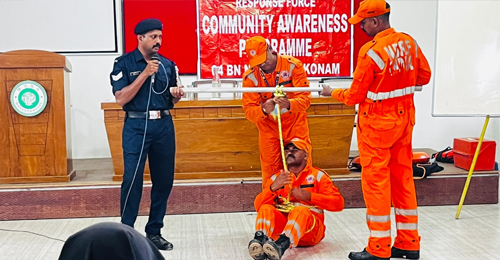
Ropes and Sacks Become Lifesaving Tools as NDRF Trains Wayanad’s First Responders
Long before an ambulance can reach a flooded village or a landslide hit hillside, it...
LEARN MORE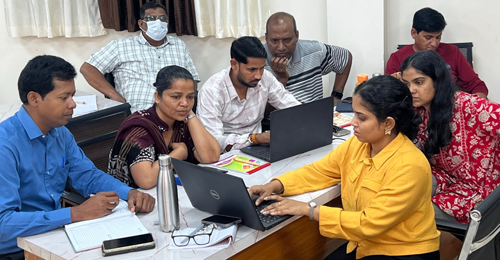
Caritas India Trains Partner Organisations in Evidence Based Project Proposal Writing
Some of the strongest community projects never get built, not for lack of need or...
LEARN MORE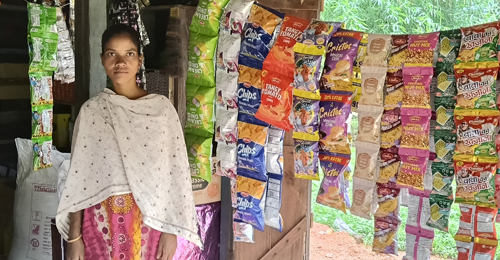
A Grocery Shop, a Mother’s Resolve, and Three Daughters Who Stayed in School
Three young girls in this remote village are attending school regularly today because their mother...
LEARN MORE 91 -11 - 23362735
  director@caritasindia.org


