
 91 -11 - 2336 3390
  director@caritasindia.org
 Karnataka farmer uses multi-cropping method for enhanced income
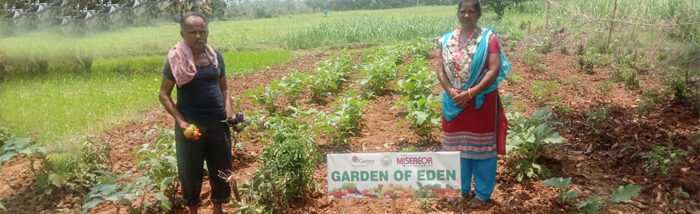
Rachappa Basappa Pagad has changed the course of his livelihood after practising the multi-crop method of cultivation which is promoted by the Ujjivana program in his village.
According to the State programme associate of Karnataka, Rachappa is earning an income of Rs. 40,000/- per month from his 3 acres of land at Kogilgeri Village of Alnavar Taluka of Dharwad District, Karnataka.
In 2017, Rachappa took the first step to joining the farmer’s group and adopting organic farming practising a multi-crop system promoted by the Belgaum Diocesan Social Service Society. With the capacity building training under the Farmers group of Ujjivana programme of Caritas India, he slowly shifted his way of cultivation from traditional to multi-cropping through organic farming methods. Such a platform has not only embarked his knowledge but has motivated & influenced him to dialogue with the Government department to avail government schemes meant for marginal farmers.
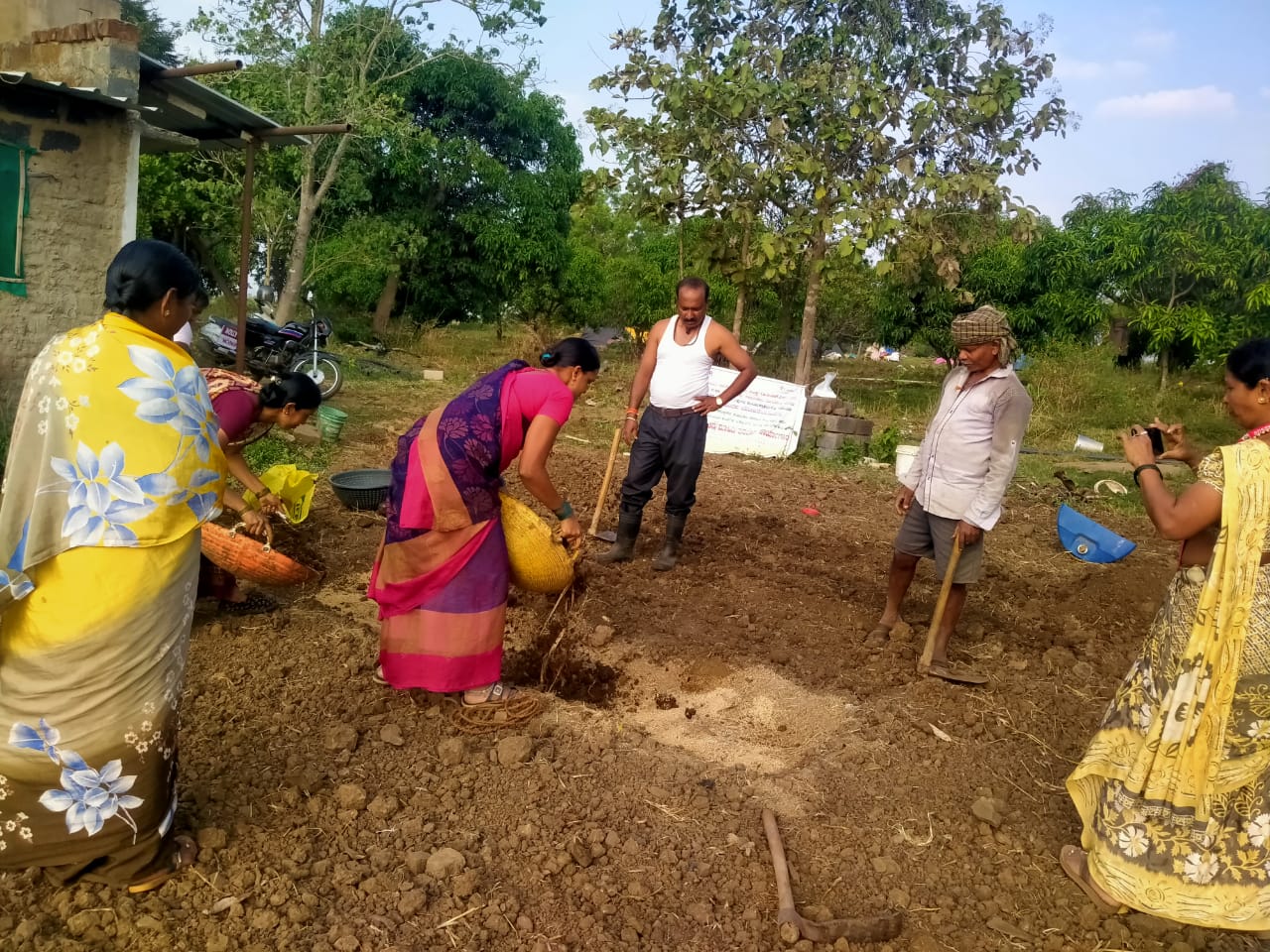
Multi-cropping is a widespread land management strategy to intensify agricultural production and diversify the crop mix for economic and environmental benefits. It decreases the input cost, irrigation, labour, etc.
As a traditional farmer, Rachappa was growing only sugar cane and paddy using chemical fertilizers and pesticides. While making the cost-benefit analysis of chemical farming, he understood that chemical farming is more expensive, and profit is less. After getting various trainings from BDSSS, he started growing vegetables, fruits & flowers along with sugar cane and paddy. He never faced challenges related to manure as he had 10 cattle to provide cow dung and cows urine as an organic manure for the multi-cropping systems. Slowly, he reduced chemical farming and switched to organic farming. He also received support from his family members and gradually started getting income regularly. With the increased income, he could manage the education expenses of his three children.
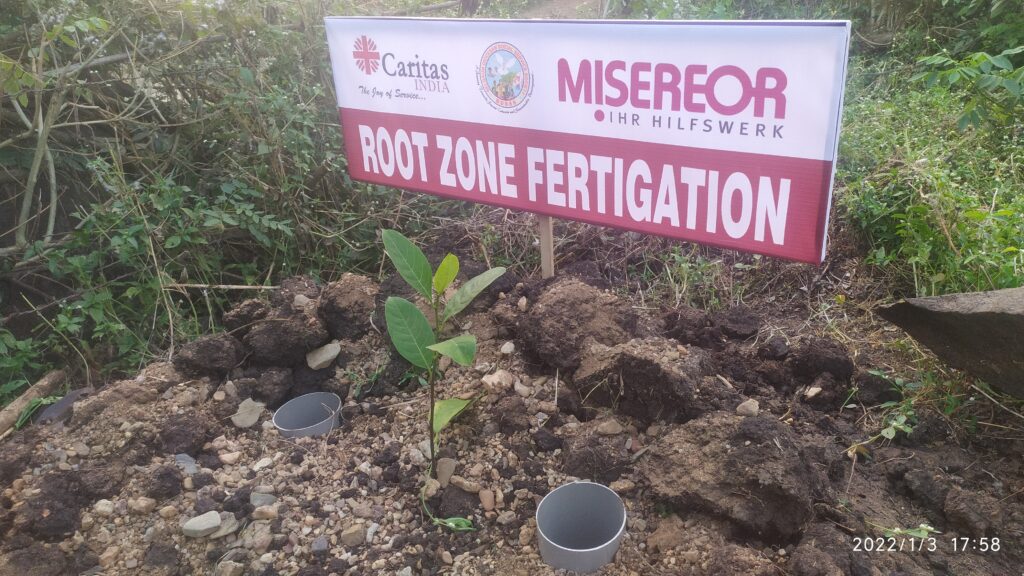
Ujjivana is a part of U3 (Ujjivana, Ujjwala and Uttoran) program implemented by Caritas India with the support of Misereor to promote climate-resilient farming practices in 15 districts of Karnataka, Telangana and West Bengal. Through this program, BDSSS has been able to support 6 families for Pollution Free Poultry Farming (PFPF), 10 families for root zone fertigation/Miyawaki tree plantation and 50 families for promoting integrated nutrition gardening. In collaboration with AICRP Home Science, BDSSS were able to extend additional support to the families by providing 25 chicks to every 6 families selected for PFPF. Through the ‘Poshan Abhiyan Scheme’, 60 most marginalized farmers provided vegetable seeds, vegetable saplings (chilly, brinjal, tomato), moringa, coconut, and guava papaya saplings. Out of 60 families, 16 families including Rachappan are practising integrated nutrition farming methods and motivating their fellow to adopt the same method which results in better yield.
Upcoming News
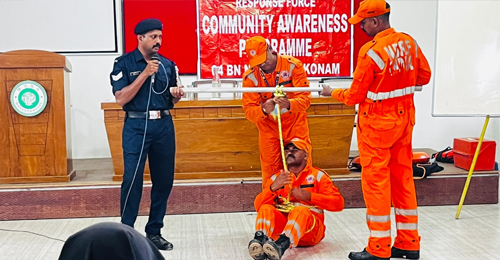
Ropes and Sacks Become Lifesaving Tools as NDRF Trains Wayanad’s First Responders
Long before an ambulance can reach a flooded village or a landslide hit hillside, it...
LEARN MORE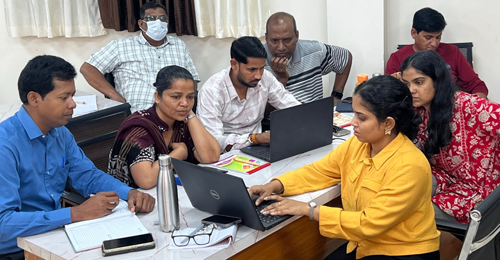
Caritas India Trains Partner Organisations in Evidence Based Project Proposal Writing
Some of the strongest community projects never get built, not for lack of need or...
LEARN MORE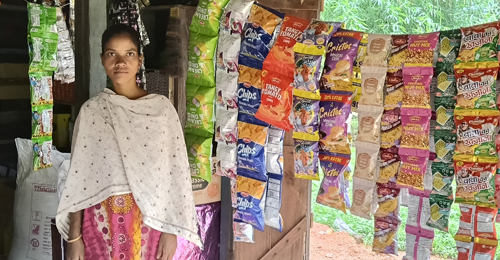
A Grocery Shop, a Mother’s Resolve, and Three Daughters Who Stayed in School
Three young girls in this remote village are attending school regularly today because their mother...
LEARN MORE 91 -11 - 23362735
  director@caritasindia.org


